Insults and intimidation: an SEP 'intervention' at the Left Forum

by Frank Brenner


This website sponsored a lively and successful panel at this year's Left Forum in New York City on the subject of utopia, psychoanalysis and the Marxist theory of human nature. An audience of 40 or more, including a dozen or so university students as well as activists and progressives heard four talks – on socialism and happiness, on the thought of socialist psychoanalyst Erich Fromm, a critique of Slavoj Zizek's reading of French psychoanalyst Jacques Lacan, and a consideration of the enduring relevance of Marx's theory of alienation. There were lots of questions and contributions from the audience, and discussion continued informally after the room was vacated. We will eventually be posting some of these talks for our readers.


Some of the audience at the overflow capacity panel sponsored by permanent-revolution

But the behavior of members of the Socialist Equality Party (SEP) who attended the panel deserves some comment. Readers of this website know that we have been involved in a longstanding polemical dispute with this party, which once stood for Trotskyism but has for over a decade now veered off in an ever more stridently sectarian direction. One manifestation of that political degeneration has been their resort to personal slander against Alex Steiner so as to avoid dealing with the substance of our criticisms. (See the series Downward Spiral.)


Three SEP members, including leading figures in the party, Bill Van Auken and Fred Mazelis, attended our panel. They asked no questions, offered no opinions about the material being presented, and sat out the whole two hours in stony silence. Van Auken took copious notes, but clearly not for the purpose of making any political intervention at the meeting. He also kept pointing a camera and taking pictures of the panelists.


When the meeting was over, Van Auken came up to me and declared, “You're a fraud!” Why? It turned out that the accusation had nothing to do with my talk; rather what incensed Van Auken was that the panelist chairing the meeting had introduced me by stating that I had written articles for the World Socialist Web Site as well as for permanent-revolution.org. How dare I cite the articles I wrote for the WSWS as part of my credentials when I was attacking the SEP! It would be like James Cannon, the American Trotskyist leader, citing his work for the Daily Worker (the Stalinist newspaper) as part of his credentials. This accusation was wrong on all kinds of counts, as I'll get to in a moment, but I kept asking Van Auken why he or Mazelis hadn't spoken in the meeting. After all, there was complete freedom to raise any objections or differences they had, including denouncing me for being a fraud. Instead of answering, Van Auken gestured towards the room, “You've found your audience,” the obvious implication being that this was a worthless audience, one that befit a fraud, so clearly there wasn't any need to intervene in such a meeting.


Let me dispense with Van Auken's argument, such as it is. First, the articles I did for the WSWS in an earlier, healthier, period of the party's existence aren't invalidated by my criticisms of the SEP's later evolution. Those articles, particularly on the history of psychoanalysis in the Soviet Union and the essay, “Mental illness and the American dream”, happened to be directly relevant to the subject of the panel discussion, so a passing reference to my association with the WSWS in the introduction was entirely in order. As for the analogy to Cannon, this is specious. Cannon never denied or hid his history in the Communist Party, anymore than Trotsky did; the later Stalinist degeneration of the CP didn't erase the significance of the revolutionary work that had been done prior to that degeneration. What Van Auken is really saying is that by criticizing the SEP, I have forfeited any claim to the work I did on the WSWS. This is indicative of a mindset closer to a political cult than to Marxism, a mindset that equates any criticism with treachery; hence the slanders against Steiner and now the insults directed at me.


Also revealing is Van Auken's contempt towards the audience. To be sure, an event like the Left Forum attracts people in and around the middle class radical milieu. Some of these people are entrenched in that milieu, but others are looking for a fresh orientation. The revolutionary events in the Middle East and the upsurge of workers in Wisconsin have reignited interest in left-wing politics, a trend reflected in the record numbers of panels and people attending this year's Left Forum. None of this matters to the SEP, which doesn't even consider this milieu to be part of the left, routinely referring to it as the “ex-left”. Indeed, if you believe the SEP, there is no one on the left anymore – except the SEP.


So you have to wonder why the SEP would bother to attend a panel given by frauds to an audience of worthless “ex-lefts”. Since they clearly weren't intending to intervene politically, they must have had another purpose in mind. Just what that purpose was is evident from their behavior, to wit, you come to a political meeting, take copious notes, snap lots of pictures of the panelists, say nothing in the meeting but afterwards hurl insults at one of the speakers. I think a reasonable interpretation of this behavior is that its intention was intimidation.


(It may well be that the note-taking and picture-taking will be used in an article, though one has yet to appear on the WSWS a week after the Left Forum. But to suppose that the SEP's behavior can simply be explained as an exercise in journalism isn't credible. For one thing, you wouldn't have needed three people to attend if all you wanted to do was write an article. The SEP wasn't just reporting on a meeting, it was conducting an 'intervention', one with a sinister edge.)


To put this matter into perspective, all you need to do is consider the following hypothetical: Let's say that I was to attend a public meeting of the SEP and behave in the same way that Van Auken and Mazelis behaved in our panel. I take lots of notes, snap lots of pictures and when the meeting is done I walk up to the speaker, say SEP leader David North, and insult him. Anyone with the slightest familiarity with the SEP would know at once what would happen: to begin with, I wouldn't be allowed into the meeting, but if by some miracle I did get in, the moment I pulled out a camera I would be ejected from the meeting. The SEP, in other words, would consider such behavior an outright provocation – except when they are the ones who are doing the provoking!

Another angle of the packed classroom
Share:

Some reflections on the revolution in Egypt

by Frank Brenner

Tahrir Square Egypt

In Egypt the archaeologists are on strike. So are a great many other workers.


Revolution is about speed – in 18 days a 30-year-old dictatorship collapses. But it's also about turning the world upside down – or from the standpoint of human freedom, right side up. And when you do that, chunks of the past, as well as of the future, come tumbling out. The ouster of Mubarak is seen as the downfall of a pharaoh, and how could it be otherwise in a country as burdened with history as Egypt. Tradition departs from its normally conservative role, suddenly aroused by an electric jolt. History produces a delirious joy – in Tahrir Square on the announcement of Mubarak's resignation – when you have the power to make history yourself.


In passing the protestors buried not only a dictatorship but also a thesis, about the supposed “end of history”: nothing disproves that thesis so much as the deep passion, so deep it can outlast a half-century of suppression, of the objects of history to become its subjects. And this seems to be true even of the archaeologists, official custodians of all that ancient past. Is there a hieroglyph for strike?

Egyptian protestors

Revolutions sometimes come labelled with dates. In Russia in 1917 there was the February Revolution and then the October Revolution; in Cuba Castro called his guerrilla band the July 26th movement. In Egypt we now have the January 25th revolution, the day of the first mass occupation of Tahrir Square. (As a case of truth being stranger than fiction, January 25 is a holiday in Egypt – Police Day!)


But sometimes affixing a label might also come out of an impulse to limit and foreclose what is still an ongoing process. The dominant narrative in the mass media is that this is a “people's revolution” – leaderless, ideology-less, socially amorphous, but whose leading elements are from the educated middle class, denizens of the brave new world wrought by Facebook and Twitter. This all plays nicely to Western mainstream public opinion, especially the social media angle – a revolution full of heartfelt sentiments about 'democracy' and 'humanity' led by Arab versions of Mark Zuckerberg.


And an obscure American disciple of Gandhi, one Gene Sharp, is suddenly thrust into the limelight as the intellectual powerhouse behind this movement. Sharp is the author of a number of handbooks on Gandhian-style civil disobedience, including “198 Methods of Nonviolent Action.” There is something comical about the exactness of that number; it comes out of the same American know-how mindset that informs do-it-yourself manuals and 12-step programs for recovering alcoholics. (Alas, the Iranian government did not see the humour in this: it claimed, in a mass trial of anti-government protestors in 2009, that the defendants had carried out more than 100 of Sharp's 198 methods, and that presumably if they'd been allowed to get to 198, the regime would have collapsed. If only it were that simple.)


Gene Sharp, author of “198 Methods of Nonviolent Action” 

But this exclusive focus on immediate tactics bespeaks the almost total exclusion of any political strategy. The latter exists only as a lowest-common-denominator – down with the dictator. This suits a revolutionary movement groping to find its bearings through a haze of good intentions. Given the heavy-handed political suppression of the Mubarak years, it was almost inevitable that when a revolutionary explosion finally came, it would take an amorphous form. But nothing is more misguided than to turn this necessity into a virtue. The slogans and rallying cries of Tahrir Square will quickly become empty truisms that cannot sustain the revolution if the latter is going to realize the aspirations of the masses. Revolutions can only survive if they move forward, and this one can only move forward if it becomes a movement, not of Facebook users with their 198-method manuals, but of the many millions of workers too poor to be 'wired' but hungry to make their own history. For them, what began on January 25 is the prelude rather than the fulfilment of the revolution.


What is this revolution for? Now that the dictator is gone, this becomes the big question. Here is a sign from a demonstration of Egyptian ex-pats in Toronto: “Freedom is the power to live as we wish”. A fine sentiment, but as soon as we consider what this means in practical terms, it raises a very tough question: How do we wish to live? The answer you give depends on who you are, or rather on what social class you belong to. For many in the middle classes (including the large Egyptian Diaspora of professionals and academics) the revolution is about the end of corruption and crony capitalism. What they want is a clean, honest capitalism – which sounds reasonable but is blithely delusional in relation to the real world of capitalism, i.e. the world of sub-prime mortgages, Bernie Madoff and British Petroleum. A variation on this theme, popular in the blogosphere, is the notion that the Arab world is having its '1989' – as if this is something to aspire to: think oligarchs, mobsters, sex trade trafficking, rampant social destitution. (In past centuries, as Marx noted, bourgeois revolutions dressed themselves in biblical or classical garb for a semblance of legitimacy and also to mask the bourgeois limitations of their struggle. Nowadays, those limitations are exalted.)


But these are not the only voices vying to define the nature of freedom. Egyptian workers are also making themselves heard. It was their strike wave that gave the final push to force Mubarak over the edge. And after his ouster, instead of packing up and going home like the protestors in Tahrir Square, the workers have expanded their strikes, despite repeated threats from the new military junta running the country. Underlying this militancy is a classic case of the socioeconomic upheavals attendant on capitalist globalization: large-scale privatization by the Mubarak regime of state industries in the last two decades, a huge influx of global capital, and an exponential growth of social inequality, with a privileged layer tied to the regime growing fabulously wealthy while 40 percent of the population lives on $2 a day and a vast pool of young people are shut out of any prospects for jobs or a decent future of any kind. Add a big spike in food prices to this combustible mix and you have the conditions for a social explosion.


Here we encounter an optical illusion in understanding the role of social classes in revolutions, particularly in developing countries like Egypt. It is always the classes with property who present themselves as speaking for the entire nation: they are for democracy, fairness, national unity. This rhetoric of generalities is an evasion of specifics – of the enormous economic advantages these classes enjoy. (This isn't necessarily a cynical evasion; the activists at Tahrir Square are undoubtedly sincere, and deserve credit for their bravery and determination. It is rather far more a case of taking certain social realities for granted, above all the continuing existence of capitalism. The exclusive focus on tactics instead of strategy allows assumptions like this to go uncontested.)


By contrast the working class fights over issues like better wages, working conditions and pensions, greater control over the workplace and the firing of abusive or corrupt managers – in other words, economic demands that have the appearance of narrow self-interest. But this appearance is deceiving: the 'self-interest' of the working class is really the interest of all the oppressed, which is to say the great majority of the nation. To their bourgeois 'betters', the working class always seems like a 'special interest group' that threatens their freedom – including and especially the freedom to keep and expand their wealth. But what the working class fights for is freedom from social and economic oppression, freedom from poverty and misery, and without that, none of the hopes for democracy, an end to corruption and respect for human rights can ever be truly realized.


It's time to make use of some ideas that have grown dusty with disuse, now that we have the 'return' of history. First and foremost is Trotsky's theory of permanent revolution. This theory is the great antidote to common sense, and nothing is more debilitating in a revolution than common sense, that rationale for the world as it is, the world that needs to be overthrown. It is common sense that first you establish democracy and later you deal with the needs of workers and the poor. But Trotsky argued – and there is a century of experience to back him up – that just the opposite is true: the working class has to become the leading force in the revolution, it has to meet its needs for social democracy (in the literal sense) and social equality, or else political democracy will end up being little more than a sham, Mubarakism with a new face.


Another idea worth dusting off – world revolution. It's impossible to understand events in Egypt in a national context. Most obviously the revolution there has been part of a chain reaction of uprisings in the Middle East and North Africa – Tunisia first off, and after Egypt, Yemen, Bahrain, Libya, Jordan, Iran. The underlying economic causes – the growth of social destitution and inequality, even the recent food price hikes – are global in origin. And the tremors from these events are being felt around the world. This isn't just a matter of solidarity in an abstract sense – the oppressed everywhere are taking direct inspiration from these revolutionary struggles. In faraway Wisconsin, USA, an ex-soldier participating in a mass union occupation of the state capitol building remarked, “I fought in Iraq and came home to Egypt.” 'Workers of the world, unite' suddenly seems like a very contemporary idea. Which suggests yet more anti-common sense: Marx and Trotsky are better guides to revolution than Gandhi.


Protestors in Wisconsin state capitol

Honourable mention should also be made of Freud, another thinker whose ideas have been buried somewhat prematurely. The emotional drama in Tahrir Square seemed to play out in Freudian terms – Mubarak as the stern father-figure, his opponents as rebellious children. (In Libya, this tension has become horrifyingly pathological, with a ruler so unbalanced that he is now slaughtering his own people.) These psychological roles are crucial to the whole mindset of nationalism – the nation as family and the leader as parent, demanding obedience, occasionally in exchange for promises (almost always unkept) of benevolence. Mubarak kept trying to play this role (as did his top henchman Omar Suleiman) even as power was slipping away: in his final speeches he repeatedly referred to himself in paternal terms and kept urging “the children” in Tahrir Square to go home. (Libyan dictator Gaddafi has taken this further, consistent with his more murderous intent, claiming the protestors in his country are all high on drugs.)

Protestors in Tobruk destroy a statue of Gaddafi's "Green Book"

But “the children” weren't listening. Instead they began conceiving of a new, more empowering relationship. According to a report on NPR, the most popular song in Egypt right now is by revered singer Mohamed Mounir called “Ezzay” (How come?), which compares Egypt to a lover. As explained in the report, the song's message to Egypt is as follows: “I love you, and I know you love me too, but you have to appreciate what I'm doing for you. I will keep changing you until you love me as I love you.” As one would say in English, them's fighting words. The “children” have grown up. “I will keep changing you until you love me as I love you.” Even in a paraphrase in English, even without music, that has a wonderful resonance. But why stop at Egypt? If you 'globalize' this feeling, then you begin to approach the emotional appeal of socialism – the brotherhood and sisterhood of humanity.
Share:

Savage Sentence for Iranian Filmmaker Panahi

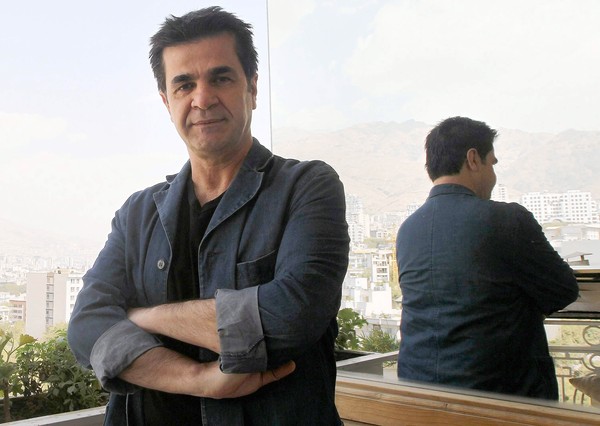
Panahi in Teheran in August

Award-winning Iranian filmmaker Jafar Panahi and his collaborator Mohammad Rasoulof were handed a 6 year prison term by an Islamic court in Iran in December for engaging in "propaganda against the state." In addition, Panahi was banned for 20 years from engaging in any artistic activities, which includes the writing and making of films, giving interviews to the press, leaving the country or communicating with foreign cultural organizations. In short the mullahs who run Iran want not only to imprison Panahi but permanently wreck his artistic career. A great many prominent filmmakers and actors as well as human rights organizations have denounced this sentence. The point has rightly been made that this is an attack on all of Iranian cinema, one of the most creative and humane film cultures of the last quarter century.

On Tuesday the foreign affairs chief of the European Union, Catherine Ashton, called for the repeal of Panahi's sentence.  Ashton's statemnt said in part,

"The EU calls on Iran to live up to those international obligations, including the right to freedom of expression through art and writing.


"This case is all the sadder given the high international reputation of the Iranian film industry and Iranian filmmakers."

While one should take any statement about human rights emanating from an official spokesman for the EU with a grain of salt it is nevertheless significant and indicative of the revulsion felt by many in the art and cinema community internationally that such a statement was issued.

Panahi and Rasoulof now share the fate of thousands of other Iranians jailed for their opposition to this regime. Gagging artists is always a sign of political weakness. It's not coincidental that this savage sentence came down at the same time the Ahmadenijad government eliminated subsidies on many basic staples that will devastate the already meager living standards of workers and the poor. Socialists in the West have an obligation not to lend any credibility or legitimacy to the designs against Iran by Western imperialism but it is equally our duty to stand in solidarity with the victims of this hateful regime. We urge our readers to sign a petition in defense of Panahi posted here:


http://www.ipetitions.com/petition/solidarite-jafar-panahi/

For our prevous statements on Panahi, see:
 
Iranian filmmaker Jafar Panahi's court statement 
 
A case of political hypocrisy: The WSWS's 'defense' of jailed Iranian filmmaker Jafar Panahi
Share:

Defend Julian Assange

The following statement was issued by the editor in chief of Wiki Leaks, Julian Assange.  We are reprinting it here unchanged as it appeared in the Australian newspaper, The Australian.[1].  Assange has been the target of a vicious campaigns of threats, character assassination and a judicial frame up for exposing the criminal nature of the foreign policy of the United States and other imperialist powers.  The defense of Assange should be a cornerstone of the struggle against imperialist war.

Assange's statement is an eloquent defense of his actions in exposing the lies that governments routinely tell their people. As a result of the material published in Wiki Leaks recently we have a birds eye view of what goes on in the world of diplomacy where, behind the veneer of bourgeois democracy and its hypocritical invocation by our political leaders, whether they be Bush or Obama,  there lies relations power so cynical, ruthless and amoral as to make the Borgias' blush.  It may come as a surprise to some that Assange invokes the father of the notorious right wing press baron Rupert Murdoch, namely Keith Murdoch, as an example of a journalist of integrity.  But in fact the allusion is appropriate as Keith Murdoch stood up against the British government in World War I and exposed an uncomfortable truth about their military policy.


Julian Assange

Don't shoot messenger for revealing uncomfortable truths

WIKILEAKS deserves protection, not threats and attacks.


IN 1958 a young Rupert Murdoch, then owner and editor of Adelaide's The News, wrote: "In the race between secrecy and truth, it seems inevitable that truth will always win."

His observation perhaps reflected his father Keith Murdoch's expose that Australian troops were being needlessly sacrificed by incompetent British commanders on the shores of Gallipoli. The British tried to shut him up but Keith Murdoch would not be silenced and his efforts led to the termination of the disastrous Gallipoli campaign.

Nearly a century later, WikiLeaks is also fearlessly publishing facts that need to be made public.

I grew up in a Queensland country town where people spoke their minds bluntly. They distrusted big government as something that could be corrupted if not watched carefully. The dark days of corruption in the Queensland government before the Fitzgerald inquiry are testimony to what happens when the politicians gag the media from reporting the truth.

These things have stayed with me. WikiLeaks was created around these core values. The idea, conceived in Australia, was to use internet technologies in new ways to report the truth.

WikiLeaks coined a new type of journalism: scientific journalism. We work with other media outlets to bring people the news, but also to prove it is true. Scientific journalism allows you to read a news story, then to click online to see the original document it is based on. That way you can judge for yourself: Is the story true? Did the journalist report it accurately?

Democratic societies need a strong media and WikiLeaks is part of that media. The media helps keep government honest. WikiLeaks has revealed some hard truths about the Iraq and Afghan wars, and broken stories about corporate corruption.

People have said I am anti-war: for the record, I am not. Sometimes nations need to go to war, and there are just wars. But there is nothing more wrong than a government lying to its people about those wars, then asking these same citizens to put their lives and their taxes on the line for those lies. If a war is justified, then tell the truth and the people will decide whether to support it.

If you have read any of the Afghan or Iraq war logs, any of the US embassy cables or any of the stories about the things WikiLeaks has reported, consider how important it is for all media to be able to report these things freely.

WikiLeaks is not the only publisher of the US embassy cables. Other media outlets, including Britain's The Guardian, The New York Times, El Pais in Spain and Der Spiegel in Germany have published the same redacted cables.

Yet it is WikiLeaks, as the co-ordinator of these other groups, that has copped the most vicious attacks and accusations from the US government and its acolytes. I have been accused of treason, even though I am an Australian, not a US, citizen. There have been dozens of serious calls in the US for me to be "taken out" by US special forces. Sarah Palin says I should be "hunted down like Osama bin Laden", a Republican bill sits before the US Senate seeking to have me declared a "transnational threat" and disposed of accordingly. An adviser to the Canadian Prime Minister's office has called on national television for me to be assassinated. An American blogger has called for my 20-year-old son, here in Australia, to be kidnapped and harmed for no other reason than to get at me.

And Australians should observe with no pride the disgraceful pandering to these sentiments by Julia Gillard and her government. The powers of the Australian government appear to be fully at the disposal of the US as to whether to cancel my Australian passport, or to spy on or harass WikiLeaks supporters. The Australian Attorney-General is doing everything he can to help a US investigation clearly directed at framing Australian citizens and shipping them to the US.

Prime Minister Gillard and US Secretary of State Hillary Clinton have not had a word of criticism for the other media organisations. That is because The Guardian, The New York Times and Der Spiegel are old and large, while WikiLeaks is as yet young and small.

We are the underdogs. The Gillard government is trying to shoot the messenger because it doesn't want the truth revealed, including information about its own diplomatic and political dealings.

Has there been any response from the Australian government to the numerous public threats of violence against me and other WikiLeaks personnel? One might have thought an Australian prime minister would be defending her citizens against such things, but there have only been wholly unsubstantiated claims of illegality. The Prime Minister and especially the Attorney-General are meant to carry out their duties with dignity and above the fray. Rest assured, these two mean to save their own skins. They will not.

Every time WikiLeaks publishes the truth about abuses committed by US agencies, Australian politicians chant a provably false chorus with the State Department: "You'll risk lives! National security! You'll endanger troops!" Then they say there is nothing of importance in what WikiLeaks publishes. It can't be both. Which is it?

It is neither. WikiLeaks has a four-year publishing history. During that time we have changed whole governments, but not a single person, as far as anyone is aware, has been harmed. But the US, with Australian government connivance, has killed thousands in the past few months alone.

US Secretary of Defence Robert Gates admitted in a letter to the US congress that no sensitive intelligence sources or methods had been compromised by the Afghan war logs disclosure. The Pentagon stated there was no evidence the WikiLeaks reports had led to anyone being harmed in Afghanistan. NATO in Kabul told CNN it couldn't find a single person who needed protecting. The Australian Department of Defence said the same. No Australian troops or sources have been hurt by anything we have published.

But our publications have been far from unimportant. The US diplomatic cables reveal some startling facts:

► The US asked its diplomats to steal personal human material and information from UN officials and human rights groups, including DNA, fingerprints, iris scans, credit card numbers, internet passwords and ID photos, in violation of international treaties. Presumably Australian UN diplomats may be targeted, too.

► King Abdullah of Saudi Arabia asked the US to attack Iran.

► Officials in Jordan and Bahrain want Iran's nuclear program stopped by any means available.

► Britain's Iraq inquiry was fixed to protect "US interests".

► Sweden is a covert member of NATO and US intelligence sharing is kept from parliament.

► The US is playing hardball to get other countries to take freed detainees from Guantanamo Bay. Barack Obama agreed to meet the Slovenian President only if Slovenia took a prisoner. Our Pacific neighbour Kiribati was offered millions of dollars to accept detainees.

In its landmark ruling in the Pentagon Papers case, the US Supreme Court said "only a free and unrestrained press can effectively expose deception in government". The swirling storm around WikiLeaks today reinforces the need to defend the right of all media to reveal the truth.

Julian Assange is the editor-in-chief of WikiLeaks.

[1] http://www.theaustralian.com.au/in-depth/wikileaks/dont-shoot-messenger-for-revealing-uncomfortable-truths/story-fn775xjq-1225967241332
Share:

Iranian filmmaker Jafar Panahi's Court Statement


Jafar Panahi in Teheran this past August

Note: We are reprinting in full the passionate statement issued last week by Iranian filmmaker Jafar Panahi to the court in Teheran. Panahi has established an international reputation based on such films as The White Balloon,” “ Crimson Gold,” and “ Offside.” He was arrested earlier this year by security forces of the clerical Iranian regime while making a film that was characterized by the pro-government press as "anti-state". Panahi had made no secret of his support for the protests that broke out following last year's election. In March he was jailed in the notorious Evin prison for three months. After staging a hunger strike he was finally released on bail in May. An international campaign demanding his freedom won the support of the elite of the film community. Among the notables who spoke up for Panahi are the famed Iranian filmmaker Abbas Kiarostami. He was joined by American filmmakers Steven Spielberg, Martin Scorsese and Francis Ford Coppola. At the Cannes film festival last year the famous French actress Juliette Binoche could not hold back her tears at a news conference for Panahi.


Panahi's statement is a powerful defense of basic democratic rights against the autocratic theocracy of modern day Iran. He also makes it clear that it is not only he personally who is on trial but the entire Iranian cinema and Iranian culture as a whole. Panahi's statement is not that of a revolurionary socialist but of a principled advocate of democratic rights and the autonomy of culture. Doubltess Panahi maintains certain illusions about the viability of the leadership of the protest movement, illusions which we as Marxists do not share. Nevertheless it is important to proclaim our solidarity with the protestors despite our opposition to their leadership. It is in that spirit that we are reprinting Panahi's eloquent statement. (For previous statements we have published about Panahi's case, see "A case of political hypocrisy: The WSWS's 'defense' of jailed Iranian filmmaker Jafar Panahi" and "More on the WSWS and Panahi: An exchange with a reader". )


Alex Steiner

Nov. 18, 2010


Your Honor, I would like to present my defense in two parts.


Part 1: What they say.


In the past few days I have been watching my favorite films again, though I did not have access to some of them, which are among the greatest films of the history of cinema. My house was raided on the night of March 1, 2010 while my colleague Mr. Rasoulof and I were in the process of shooting what we intended to be a socially conscious art-house film. The people, who identified themselves as agents of the Ministry of Intelligence, arrested us along with other crew members without presenting any warrants. They confiscated my collection of films as well and never returned them to me. Subsequently, the only reference made to those films was by the prosecutor in charge of my case, who asked me: “What are these obscene films you’re collecting?”


I have learned how to make films inspired by those outstanding films that the prosecutor deemed obscene. Believe me I have just as much difficulty understanding how they could be called obscene as I do comprehending how the activity for which I was arrested could be seen as a crime. My case is a perfect example of being punished before committing a crime. You are putting me on trial for making a film that, at the time of our arrest, was only thirty percent shot. You must have heard that the famous creed, “There is no god, except Allah,” turns into blasphemy if you only say the first part and omit the second part. In the same vein, how can you establish that a crime has been committed by looking at 30 percent of the rushes for a film that has not been edited yet?


I do not comprehend the charge of obscenity directed at the classics of film history, nor do I understand the crime I am accused of. If these charges are true, you are putting not only us on trial but the socially conscious, humanistic, and artistic Iranian cinema as well, a cinema which tries to stay beyond good and evil, a cinema that does not judge or surrender to power or money but tries to honestly reflect a realistic image of the society.


One of the charges against me is attempting to encourage demonstrations and incite protests with this film. All through my career I have emphasized that I am a socially committed filmmaker not a political one. My main concerns are social issues; therefore my films are social dramas not political statements. I never wanted to act as a judge or a prosecutor. I am not a filmmaker who judges but one who invites other to see. I don’t get to decide for others or to write any kind of manual for anybody; please allow me to repeat my [intention] to place my cinema beyond good and evil. This kind of belief has caused my colleagues and myself a lot of trouble; many of my films have been banned, along with the films of other filmmakers like me. But it is unprecedented in Iranian cinema to arrest and imprison a filmmaker for making a film, and harass his family while he is in prison. This is a new development in the history of Iranian cinema that will be remembered for a long time.


I have been accused of participating in demonstrations. No Iranian filmmaker was allowed to use his camera to capture the events but you can not forbid an artist to observe! As an artist it is my responsibility to observes in order to get inspired and create. I was an observer, and it was my right to observe.


I have been accused of making a film without permission. Is it really necessary to point out here that no law has been passed by the parliament regarding the need for a permit to make a film? There are only some internal memos which are going through changes each time the deputy minister is changed.


I have been accused of not giving a script to the actors. In our filmmaking genre where we work mostly with non-professional actors, this is a very routine way of filmmaking practiced by myself and many of my colleagues; the cast mostly consists of non-actors. Therefore, the director does not find it necessary to give them a script. This accusation sounds more like a joke that has no place in the judiciary system.


I have been accused of having signed a declaration. I have singed one: an open letter signed by 37 prominent film makers, in order to express their concern about the turn of events in the country. I was one of them. Unfortunately, instead of listening to the concerns, we were accused of treachery. However, these filmmakers are the very same people who have expressed their concerns in the past about injustices around the world. How can you expect them to remain indifferent to the fate of their own country?


I have been accused of organizing demonstrations at the opening of Montreal Film Festival. At least some truth and fairness should back up any accusations. I was the chair of the jury in Montreal and arrived only a few hours before the opening. How could I have organized a demonstration in a place where I hardly knew anyone? Let’s not forget that in those days the Iranian Diaspora would gather at any relevant event around the world to voice their demands.


I have been accused of giving interviews to Persian-speaking media abroad. I know for fact that there are no laws forbidding us from giving interviews.


Part 2: What I say.


History testifies that an artist’s mind is the analytical mind of his society. By learning about the culture and history of his country, by observing the events that occur in his surroundings, he sees, analyzes and presents issues of the day through his art form to the society.


How can anyone be accused of any crime because of his mind and what passes through the mind?


The assassination of ideas and sterilizing artists of a society has only one result: killing the roots of art and creativity. Arresting my colleagues and I while shooting an unfinished film is nothing but an attack by those in power on all the artists of this land. It drives this crystal clear however sad message home: “You will repent if you don’t think like us.”


I would like to remind the court of yet an other ironic fact about my imprisonment: the space given to Jafar Panahi’s festival awards in Tehran’s Museum of Cinema is much larger than his cell in prison.


All said, despite all the injustice done to me, I, Jafar Panahi, declare once again that I am an Iranian, I am staying in my country and I like to work in my own country. I love my country, I have paid a price for this love too, and I am willing to pay again if necessary. I have yet another declaration to add to the first one. As shown in my films, I declare that I believe in the right of “the other” to be different, I believe in mutual understanding and respect, as well as in tolerance; the tolerance that forbid me from judgment and hatred. I don’t hate anybody, not even my interrogators.


I recognize my responsibilities toward the future generations that will inherit this country from us.


History is patient. Insignificant stories happen without even acknowledging their insignificance. I, myself, am worried about the future generations.


Our country is quite vulnerable; it is only through the [guarantee] of the state of law for all, regardless of any ethnic, religious or political consideration, that we can avoid the very real danger of a chaotic and fatal future. I truly believe that tolerance represents the only realistic and honorable solution to this imminent danger.


Respectfully,


Jafar Panahi

An Iranian filmmaker
Share:

On the Anniversary of the October Revolution


On this day, the 93rd anniversary of the Russian Revolution, we are publishing an excerpt from a speech given by Trotsky on the occasion of the Fifth Anniversary of the revolution.  The text is taken from the volume, The First Five Years of the Communist International, Volume 2.  This HTML version is from the Marxist Internet Archives. 

Nov. 7, 2010 


The Fifth Anniversary of the October Revolution and the Fourth World Congress of the Communist International


Delivered Before the Active Membership of the Moscow Organization
October 20, 1922

Comrades, the Fourth World Congress of the Communist International will convene during a jubilee for the Soviet power, its Fifth Anniversary. My report will be devoted to these two events. The jubilee is of course a purely formal one; involving a date on the calendar, but events are not regulated by the calendar. The fifth anniversary of the Soviet power does not represent any kind of completed historical period, all the less so because in our revolutionary epoch everything is undergoing change, everything is in flux, everything is still far from static, nor will the finished forms be reached soon. Nevertheless it is quite natural for every thinking individual, all the more so a Communist, to strive toward an understanding of what has taken place, and to analyse the situation as it shapes up on this formal date on the calendar, on the fifth anniversary of the Soviet power and, therefore, also on the occasion of the Fourth World Congress of the Comintern.


The Tangled Skein of Capitalist Contradictions is Becoming Unravelled, Beginning with Russia

Two day ago I happened to attend a party cell meeting at the former Bromley plant. One of the comrades there, a member of the cell, raised the following question: In what country would the proletarian revolution be most advantageous from the standpoint of Communist interests? After a moment’s reflection I replied that taking it so abstractly one would have to say that a revolution in the United States would be the most advantageous. The reason for this is quite easy to understand. This country is the most independent in the world, economically speaking. Its agriculture and industry are so balanced as to enable the country to lead, in the event, say, of a savage blockade, a wholly independent existence. Moreover it is the richest country in the world, disposing of the foremost industrial technology, holding in its hands approximately one-half, perhaps slightly less, of the visible gold reserve. It is a country concentrating in its hands the bigger half of world production in the most important branches. Naturally, were the proletariat of this country to take power into its hands, it would possess unsurpassed material foundations, and organizational and technical premises for socialist construction. The next country in order is – Great Britain, while Russia would come on this list if not the very last in the series (because there exists Asia, there is Africa), then at any rate very low toward the bottom of the list of countries within the borders of Europe. Yet history is, as you know, unravelling this tangled skein from the opposite end, namely from the end where Russia is located, a country which, in the cultural and economic sense, is the most backward among the major capitalist countries, a country which is extremely dependent in the economic and technological sense, and which, in addition, has been utterly ruined by the war. And if we were to ask ourselves today what are the political premises for the proletarian revolution in the United States, then naturally one may grant a possible course of events such as may extraordinarily hasten the conquest of power by the American proletariat. But if we take the situation as it stands today, then we must say that in this strongest, largest, and most decisive leading capitalist country, the political premises, i.e., premises on the plane of the creation of systematic party and class organizations, are the least prepared. One could devote an entire report to explain why history began unravelling the skein of revolution from such a weak and backward country in the economic sense as ours, but in that case I would be able to speak of neither the Fourth World Congress nor of the fifth anniversary of the Soviet power. It suffices right now that we have been compelled for these five years to pursue the work of socialist construction in the economically most backward country, while capitalism, mortally hostile to us, has been preserved in bourgeois countries far superior to us economically. This is the fundamental fact, and from it, naturally, stemmed the fearsome intensity of our civil war.


The Fundamental Lesson of the Russian Revolution

Here, if we wish to draw our fundamental conclusion, we must say in praise of our party that it has set a colossal example – for the proletariat of all countries – of how to fight for power and of how, after conquering it, to defend this power by means of the most resolute measures, applying wherever necessary harsh and ruthless methods of dictatorship, without flinching before any decisive measures in trampling upon bourgeois hypocrisy, when at stake is the securing of state power by the revolutionary proletariat. And this textbook of the Russian Revolution, which ought to be written, the workers of all countries will study in the course of the next few years or perhaps decades, because it is impossible to say how long the proletarian revolution will endure from its beginning to its termination: It is a question of an entire historical epoch. Whether we did or did not make mistakes during the civil war (and of course there were mistakes), we nevertheless did on the whole accomplish the most classic part of our revolutionary work. We have more than once spoken of the mistakes which conditioned our need to retreat in the economic sphere, a major retreat which is known among us as the NEP (New Economic Policy). The fact that we marched forward at the very beginning along a certain road, and then retreated and are now fortifying ourselves on certain positions, tends to disrupt in the extreme the perspective not only among our enemies but also among many of our friends. Correspondents sympathetic to us and many Communists, European and American alike, pose as the first question, both during the departure of our delegation to Genoa as well as today, the fact that many things have changed in Moscow (and there were many visitors to Moscow in 1919 and 1920) and that Moscow now resembles too much other European and American cities. And in general where is the guarantee that you Russian Communists will check the further development and head for Communism and not for capitalism? Where is the guarantee?


The general impression at a superficial glance is that the socialist conquests gained in the first period are now spontaneously and automatically melting and crumbling away and there does not seem to be a power capable of retaining them. It is possible, Comrades, to approach the question from the other end and say as follows: Let us for a moment forget that we proceeded along the line of the so-called War Communism and later retreated to the present position. Let us take the situation as it exists today and compare it with what it was on October 25, or on the eve of the 1917 revolution. If our foreign well-wishers or the European and American Communists were to submit us to a cross-examination, we would say: The railways, the mines, the plants and the factories were at that time in the hands of private owners. Enormous areas of the land and the country’s natural resources were in the hands of private owners. Today all the railways, the overwhelming majority, or in any case all of the most important plants and factories, all of the most valuable natural resources in the country are in the hands of the state, which is, in turn, the property of the working class, supporting itself upon the peasant masses. This is the fact which we have before us as the product of five years. There was an offensive followed by a retreat, but here is the balance sheet: As the product of five years, the most important means of industry and production and a considerable sector of agricultural production are under the direct supervision and management of the workers’ state. This is a fundamental fact. But what has produced the retreat? This is a very important question, because the very fact of the retreat tends to disrupt the perspective. How did we conceive the successive order, the course of nationalizing the means of industry and of the organization of socialism? In all our old books, written by our teachers and by us, we always said and wrote that the working class, having conquered state power, will nationalize step by step, beginning with the best prepared means of production, which will be transferred to the socialist foundations. Does this rule remain in force today? Unquestionably it does, and we shall say at the Fourth World Congress, where we will discuss the question of the Communist program: will the working class on conquering power in Germany or in France have to begin by smashing the apparatus for organizing the technical means, the machinery of money economy and replace them by universal accounting? No, the working class must master the methods of capitalist circulation, the methods of accounting, the methods of stock market turnover, the methods of banking turnover and gradually, in consonance with its own technical resources and degree of preparation, pass over to the planned beginnings, replacing accounting by a computation of the profitability or non-profitability of a given enterprise, replacing accounting by taking stock of the centralized means and forces, including the labour force.


This is the fundamental lesson which we must once again teach the workers of the whole world, a lesson we were taught by our teachers. If we violated this lesson, it was owing to conditions of a political character, owing to the pressures brought to bear upon us after our conquest of state power. This is the most important difference between the proletarian revolution as it has occurred in Russia and the revolution which will occur, say, in America. In that country, prior to the conquest of power, the working class will have to surmount the most colossal difficulties but once it has conquered power, the pressure on those fronts on which we were compelled to fight will be far less, because our country with its petty-bourgeoisie, its backward kulaks (well-to-do peasants), experienced the revolution in a different way and because our revolution caught the Russian bourgeoisie by surprise. By the very fact of the October revolution we taught the bourgeoisie to understand just what it has lost when the workers took power and it was only the fact of the revolution itself that impelled the bourgeoisie, the kulaks and the officers to organize. We smashed the bourgeoisie not so much prior to October 25 and during the night of October 25-26 as in the three years’ interval following October 25, when the bourgeoisie, the landlords and the officers fathomed what was involved and began the struggle against us with the aid of European capitalism. In Europe we have a process differing profoundly from that in our country, because there the bourgeoisie is far better organized and more experienced, because there the petty-bourgeoisie has graduated from the school of the big bourgeoisie and is, in consequence, also far more powerful and experienced; and, in addition, the Russian Revolution has taught them a good deal. In these countries therefore the preparation and the arming of counter-revolutionary gangs is now taking place parallel with the preparation and tempering of the Communist Party for this struggle, which will be far more intense prior to their October 25, but not afterwards. Only before. The fact that in our country, the day after the conquest of power, the plants and factories turned out to be the fortresses and citadels of the bourgeoisie, the main base upon which European imperialism was able to depend, this fact compelled us to resort to nationalization, independently of our ability or the extent of our ability to organize these enterprises with our own forces and resources.


And if, for political reasons, we drove the property owners out of the factories, while being ourselves bereft of the possibility of even immediately gaining hold of these factories; if, for political reasons, we brought down the sword of dictatorship and of terror upon the stock market and the banks, it is self-evident that we thereby mechanically destroyed the apparatus in the service of the bourgeoisie and which the bourgeoisie employed for organizing the economy and for distributing the productive forces and commodities in the country. Insofar as we destroyed this apparatus at a single blow, we were, generally speaking, obliged to replace it with another – with the apparatus of centralized accounting and distribution. But such an apparatus had first to be created; we had to have it; but, naturally owing to all the preconditions, owing to our entire past, owing to our level of development and knowledge, we could not possibly create it. And so, because of the titanic and ineluctable aspects of the civil war as such, and because of the impossibility even for an advanced working class and all the more so for us, in a backward country, to create an apparatus of socialist calculation and distribution in the space of twenty-four hours – precisely because of this there arose the entire tragedy of our economy. War Communism, too, was not our program – it was imposed upon us. To the extent that there were fronts in the civil war, to the extent that we were compelled to destroy the enemy’s bases of support behind these fronts, i.e., the private capitalist enterprises of all categories, to that extent we were driven to manage the enterprises in a migratory and warlike manner. This was the epoch of War Communism and I shall not conceal that here, as is always the case, people tended to make a virtue out of necessity, i.e., in the same measure as War Communism was imposed upon us, the party workers and the leading party institutions tended to be carried away by inertia, in the sense of deluding themselves that we had here a complete solution of the tasks of socialist economy. But if we draw the balance sheet, we must say that the offensive and the retreat in the domain of economy had been dictated by the requirements of the civil war, which were absolutely imperative, and which cut across our economic conditions and the degree of our economic adaptation, or lack of adaptation. In other words, essentially both our offensive along the line of War Communism as well as our retreat along the line of the NEP were historically unavoidable in part and as a whole; and only on the basis of this historic necessity is it possible and necessary to analyse our subjective errors – both as a party and as a state power.


The Overhead Expenditures of the Revolution

There remains, Comrades, the most important question of all. As a result of five years, the workers’ state, as I said, disposes, after our retreat, of the most important means of production, and wields power. This is a fact. But there also is another fact – namely that we represent today one of the poorest countries in Europe. Yet it is quite obvious that socialism has meaning only to the extent that it assures a higher productivity of labour. Capitalism in its day superseded feudalism, while the latter superseded slave economy. Why? Because each succeeding economic order was more profitable in the socio-technological sense than the order it shunted aside; and socialism will naturally acquire its practical and not theoretical justification only on the condition that it supplies a greater quantity of goods per each unit of labour power for the satisfaction of social needs. And this is the chief argument employed against us. It was made use of even by the French representatives at Genoa; and Colrat, the French economic expert, repeated it in a crude and insolent form: “Don’t you dare teach us socialism when your own country is in a state of complete disorganization.” We would have preferred to provide in the last five years proofs of empirical character that is, show Europe an economy superior to the one which we obtained in 1917. This does not happen to be the case, but this is already ascribable entirely to the expenditures incurred by the revolution itself. Not a single revolution was ever accomplished without a lowering of the country’s economic level; and one of the conservative bourgeois historians of the French Revolution, Taine, so highly esteemed in the Third French Republic, has affirmed that for eight years following the Great French Revolution, the French people remained poorer than they were on the eve of revolution. This is a fact. Society is so shot through with contradictions, that it is capable of reaching a higher stage of development only through an internal class struggle. Society is so constituted that an internal class struggle in the fully unfolded form of civil war implies a lowering of economic levels. But, at the same time, of course, (every school boy knows this today), it was precisely and exclusively the Great French Revolution that created in France those governmental, juridical and cultural premises which provided the sole basis for the development of capitalism there, with all of its prowess, its technology and its bourgeois culture. In other words, what I wish to say is that the five-year period (and we must say this to all our critics, malicious and well-meaning alike who employ this argument) does not provide a historic scale by means of which it is possible to weigh the economic results of the proletarian revolution. All that we see up to now in our country are the overhead expenditures in the production of the revolution. These are expenditures for the revolution itself. And naturally, since these expenditures had to be covered from inherited capital, which, in turn, had been disorganized and devastated by the imperialist war, it therefore follows that we see in our country many more ruins of capitalism than results of socialist construction. The scale is far too small. This is what we must repeat once again at the Fourth World Congress of the Communist International. Five years in relation to the task of superseding capitalism by socialism, a task of the greatest historical magnitude – five years could not naturally bring about the necessary changes and what is, naturally, most important these five years constituted the period when socialism – as I said in the beginning – was being built or attempts were made to build it in the most backward country. The Great French Revolution, on the other hand, unfolded in the most advanced country on the European continent, a country that had attained a higher level than any other, with the exception of England across the Channel. In our country, the state of affairs assumed a far less favourable turn from the very beginning.


Here, Comrades, are in rough outline, those arguments which we shall develop in our party’s name at the Fourth World Congress where we are bound to ask our European and American comrades and at the same time ourselves, too: How do matters really stand with regard to the chances for the development of the European revolution? Because it is perfectly self-evident that the tempo of our future construction will in the highest measure depend upon the development of the revolution in Europe and in America.

Share:

The "first regular National Congress" of the SEP: Distorting the history of the International Committee

On Aug 30, 2010 the World Socialist Web Site (WSWS) published a resolution from what it called the “first regular National Congress” of the Socialist Equality Party, held in Ann Arbor, Michigan in August of this year. The bizarre quality of this resolution is only punctuated by the incongruity of describing a movement that has been functioning as the Socialist Equality Party for 15 years as having its “first regular National Congress”. Presumably this designation is meant to distinguish this convocation from the “Founding Congress” of the SEP which took place either in 2008 or in 1995 depending on which pronouncements from the WSWS you read last.  


The resolution reported out of this Conference “Twenty-Five Years Since the Split with the Workers Revolutionary Party", was, as usual, adopted “unanimously”, following a pattern that we have come to expect from Congresses of the SEP.

Read More

In Spanish / Español
Share:

100th Anniversary of the October Revolution

100th Anniversary of the October Revolution
Listen to special broadcast

ΟΧΙ: Greece at the Crossroads

ΟΧΙ: Greece at the Crossroads
Essays on a turning point in Greece 2014 - 2017

Order ΟΧΙ : Greece at the Crossroads

Permanent Revolution Press

Permanent Revolution Press
Print edition of Crackpot Philosophy

Order Crackpot Philosophy

Trump and the train wreck of American liberalism

Trump and the train wreck of American liberalism
Two essays by Frank Brenner

Order PDF of 'Trump and the train wreck of American liberalism'

PDF of Brenner on Trump -$1

Contact Form

Name

Email *

Message *