May Day 2015 in Athens, Istanbul, Jakarta and Seoul

May Day 2015 in Athens, Istanbul, Jakarta and Seoul. 

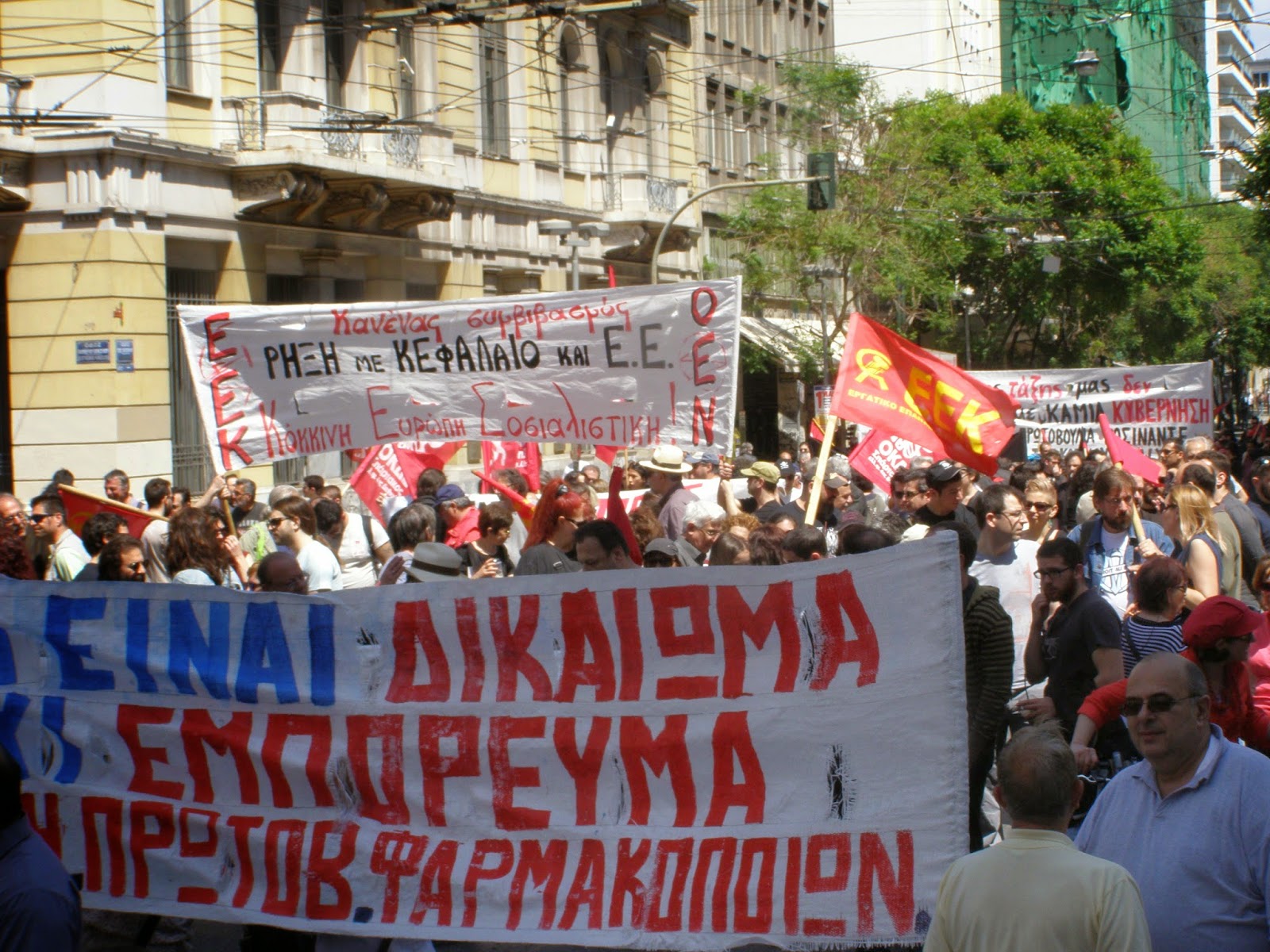
The first three photos are from the march in Athens courtesy of the Worker's Revolutionary Party (EEK).   The slogans on the various banners of the EEK's contingent were:

No compromise with the troika! Break  with the EU and the capital!  For a United Red Socialist Europe!,  Cancel the debt!, We do not forget the martyrs  of May 2, 2014 in Odessa-Smash fascism!, For workers power in Ukraine!, Our life is not a commodity, Victory to the revolt in Baltimore!, For a Balkan Socialist Federation! 


EEK contingent in May Day rally in Athens, Greece


EEK banner in Athens May Day celebration

May Day in Athens

May Day in Istanbul, Turkey, was marked by a huge police presence

May Day demonstration in Jakarta, Indonesia, featured a march to the Presidential Palace where workers demanded a raise in the minimum wage and improved working conditions.

May Day in Seoul, South Korea,  where workers called for a General Strike if the government pushes through proposed Labor "Reforms"

Share:

AN APPEAL TO THE INTERNATIONAL LABOUR COMMUNITY FROM THE WORKERS OF DITA FACTORY, TUZLA, BOSNIA AND HERZEGOVINA

DITA factory in Bosnia

 
AN APPEAL TO THE INTERNATIONAL LABOUR COMMUNITY FROM THE WORKERS OF DITA FACTORY, TUZLA, BOSNIA AND HERZEGOVINA
Tuzla, 16 April 2015


We, the workers of Tuzla-based detergent factory DITA, have been fighting a wave of corrupt privatisation, exploitation and asset stripping that is destroying the industry of Bosnia and Herzegovina.
 
For over two years now, we have guarded our factory around the clock to prevent the removal of machinery and assets.
 
The process of privatisation of DITA was carried out in collaboration with corrupt politicians, judiciary and banks, which failed to carry out due diligence, and provided toxic loans to the new owners – money that never reached the factory.
 
Our country is suffering from lack of rule of law: criminal elites have pushed through amendements to the criminal code that mean there is no court that can try financial and trade crimes.
 
This legalised theft has denied us our basic human rights: we are over 40 monthly salaries in arrears, all of which left us hungry and destitute; we have been forced to watch our family members die because we could not afford medical treatment.
 
Now bankruptcy proceedings have begun. We are resolved to maintain the occupation of the factory and are refusing to recognise the authority of the trustee managing the bankruptcy unless the interests of the workers are protected, or new investment to reactivate the factory is found.
 
We are now at a critical point. Without outside support it may only be a matter of days before we are forced to build barricades and resist enforcement from special police forces.
 
We appeal urgently to the international Trade Union movement for moral and material support.
 
DITA factory workers
Emina Busuladžić, Head of the Strike Committee
Dževad Mehmedović, Shop Steward for the Union of Non-Metal Workers
Contact: busuladzic.emina@gmail.com
 
Workers uprising in Bosnia, 2014
 
 
Share:

GREECE: CARAVAN OF STRUGGLE AND SOLIDARITY

STADIOU STREET, ATHENS, ATTICA, GREECE - 2015/04/06: The 'Caravan of Solidarity' stands outside of the Ministry of Labor. Photo by Michael Debets/Pacific Press.

On April 3-6 the Caravan of Struggle and Solidarity took place in Greece. The Caravan was co-organised by the occupied and self-managed factory of VioMe, the occupied and self-managed national radio and television of north Greece (ERT3), the union of Chalkida Cements, the fired cleaners of the Ministry of Finance, the fired school-keepers and suspended teachers.

The goal of this Caravan was for VioMe to force a meeting with the Minister of Labour and demand an immediate solution for the struggle of the workers, as promised by Tsipras himself when he visited the occupied factory about two years ago. Other workers participated not only to support VioMe but to demand of the government solutions to their own unresolved problems.

For the first time, workers from both private and public sectors - usually pitted against each other - joined to fight for the right of work, against privatizations, and against the entire 'austerity” imposed by the EU/ECB/IMF troika. Their struggle was against capitalist property relations and for re-organizing social labour on new bases - with workers’ control and workers’ management.

The Caravan started Friday evening in -where VioMe and ERT3 are located- Starting Friday evening with a demonstration through the center of Thessaloniki, home of VioMe and ERT3, the Caravan stopped for a solidarity concert in front of the national television building. Through the weekend the Caravan crossed the country by train and bus, stopping in many towns - Larissa, Volos, Levadeia, Chalkis – for demonstrations and educational events with workers in local struggles and factory unions, like the factory workers’ union at Aluminium-Hellas ( ex-Pechiney).

The Caravan arrived in Athens Sundayevening – at the National Radio TV Channel ERT in Aghia Paraskevi. The previous government of the Right and PASOK, on the troika’s orders, had fired everyone and closed ERT. The Caravan got a warm reception from PROSPERT, the union of journalists and technicians. It then entered Syntagma Square in the capital’s center to hold a press conference. Each workers’ organization and union in the class action took the floor.

A demonstration was organizedMonday morning heading for the Ministry of Labour. But while the Minister knew the Caravan was coming, and had just said on the radio that he would welcome it, he “suddenly” had “to do a special inspection of working conditions at Athens’ airport” miles away!

Workers’ representatives finally met with Ministry officials who assured them the government will have a solution for VioMe before the court decision on selling the grounds and buildings. The solution was not specified. The Caravan warned the officials and the government that it will not dissolve but expand, and return at the first sign the government isn't keeping it's promises.

Similarly, SYRIZA completely ignored the Caravan until its last day. Suddenly its radio station advertised events, but with no participation of party organisations, nor any criticism of the Minister or government for avoiding all real confrontation of the workers or their demands. It is worth noting that the government has now presented to parliament a proposed law for Radio-TV National Stations ERT that nearly repeats the legal framework introduced by the previous pro-troika government. The radio-Kokkino (“Red”) of Syriza even criticized ERT3 workers - a major element of the Cravan - for their demands for workers’ self-management.

Centrist ANTARSYA’s position wasn't much better. It had no role in organizing the Caravan, just as it was absent from VioMe struggles. It sent only a few activists to distribute leaflets at demonstrations in Thessaloniki and Volos, while in Athens SEK (Socialist Workers Party, the Cliffite organization in ANTARSYA) joined with a small contingent to publicize their own Party activities - for next month.

Also completely absent were Stalinist KKE and Maoist organisations. Most of the anarchist movement ignored the Caravan and only a few anarcho-syndicalist organisations participated, mainly in local demonstrations.

The EEK played a crucial role in the Caravan’s organisation and victory. It had joined VioMe’s struggle from the occupation’s first day. When owners abandoned the factory, we demanded workers' recuperation of it under workers' control and self-management. EEK members joined in founding the Solidarity Initiative Committee.

We in EEK will continue our struggle to keep the Caravan as center for coordinating on-going building of a class struggle organization of the proletariat, independent of state and bureaucrats, aimed at making capital, not workers, pay for the  capitalist crisis.

In these times of crisis and great expectations, debates by VioMe and ERT3 workers over workers' control and workers' management  have opened a new chapter in the workers’ movement in Greece and internationally.

Marius van Voorthuizen

(member of EEK and of the Open Solidarity Initiative to the Struggle of the Workers of VioMe and the Solidarity to ERT3)

Share:

Σχέδιο Γ: Η σοσιαλιστική εναλλακτική λύση για την Ελλάδα


του Άλεξ Στάινερ

Μια συναρπαστική συνέντευξη με το νεο-εκλεγμένο μέλος της Βουλής των Ελλήνων, Κώστα Λαπαβίτσα, εμφανίστηκε πρόσφατα στο περιοδικό Jacobin. [1]


Ο Λαπαβίτσας, ο οποίος εκπροσωπεί τον ΣΥΡΙΖΑ στη Βουλή, είναι ένας πολύ γνωστός αριστερός οικονομολόγος και ένας αυτοχαρακτηριζόμενος μαρξιστής. Σε αντίθεση με τον Υπουργό Οικονομικών Γιάνη Βαρουφάκη, ο Λαπαβίτσας δεν είναι «αιρετικός μαρξιστής», αλλά είναι πάρα πολύ εξοικειωμένος με τη γλώσσα του ορθόδοξου Μαρξισμού. Ο ίδιος λέει ότι είναι υπέρ της σοσιαλιστικής επανάστασης και θα ήθελε να δει αυτήν να λαμβάνει χώρα στην Ελλάδα και σε όλο τον κόσμο. Επικαλείται ακόμη και τους μπολσεβίκους, αναφέροντας ευνοϊκά τον Λένιν και τον Μπουχάριν. 

Ωστόσο, αν ρίξουμε μια πιο προσεκτική ματιά στις δηλώσεις του, καθίσταται σαφές ότι η μορφή του μαρξισμού του, είναι πολύ πιο κοντά στην ποικιλία των μενσεβίκων από ό,τι στο μπολσεβικισμό.
Λέει: «Δεν χρειάζεται μια σοσιαλιστική επανάσταση, και δεν χρειάζεται να ανατρέπουμε τον καπιταλισμό σε κάθε λεπτό της ημέρας, για να κάνουμε μικρά πράγματα. Φυσικά, στοχεύουμε στην ανατροπή του καπιταλισμού, και βεβαίως εν τέλει θα θέλαμε να δούμε τη σοσιαλιστική επανάσταση. Αλλά αυτό δεν είναι πιθανό αυτή τη στιγμή.»

Αφήνοντας κατά μέρος την ψευδαίσθηση εκείνων που καλούν σε «ανατροπή του καπιταλισμού σε κάθε λεπτό της ημέρας», ο Λαπαβίτσας εκφράζει σαφέστατα την αντίληψη πως ενώ σκέφτεται ότι ο σοσιαλισμός είναι μια καλή ιδέα σε κάποιο αόριστο και μακρινό μέλλον, δεν είναι μια ρεαλιστική δυνατότητα στο άμεσο μέλλον ή ακόμα και σε αυτό που αποκαλεί «μεσοπρόθεσμo». Αντ’ αυτού, ο ίδιος πιστεύει ότι βραχυπρόθεσμα και μεσοπρόθεσμα, το καλύτερο που μπορούμε να ελπίζουμε είναι μια πιο γενναιόδωρη μορφή του καπιταλισμού. Και πιστεύει ότι αυτό μπορεί να επιτευχθεί πλήρως.
«Δεν χρειάζεσαι τη σοσιαλιστική επανάσταση στην Ελλάδα, και δεν χρειάζεται να ανατρέψεις τον καπιταλισμό στην Ελλάδα για να απαλλαγείς από τη λιτότητα. Δε το χρειάζεσαι», λέει.

Αυτό από μόνο του δεν είναι μια ασυνήθιστη θέση στο ΣΥΡΙΖΑ. Στο κάτω-κάτω, το προεκλογικό πρόγραμμα του ΣΥΡΙΖΑ υποσχέθηκε να θέσει τέλος στη λιτότητα, χωρίς με οποιονδήποτε τρόπο να θίξει τον καπιταλισμό. Αλλά αυτό που τοποθετεί το Λαπαβίτσα σε σύγκρουση με την πλειονότητα των συντρόφων του στο ΣΥΡΙΖΑ, είναι η θέση του ότι ο ΣΥΡΙΖΑ πρέπει να εγκαταλείψει τη δέσμευσή του να παραμείνει εντός της ΕΕ και να καταρτίσει πρόγραμμα εξόδου από το Ευρώ.  Πιστεύει ότι η πολιτική της παραμονής εντός της ΕΕ που έχει πραγματοποιηθεί από όλες τις προηγούμενες κυβερνήσεις, είτε ήταν το ΠΑΣΟΚ ή η Νέα Δημοκρατία, και τώρα από τον ΣΥΡΙΖΑ, υπήρξε καταστροφική. Ο ίδιος τονίζει αυτό το σημείο αρκετές φορές στη διάρκεια της συνέντευξης:
«… θα πρέπει σίγουρα να απαλλαγούμε από το θεσμικό πλαίσιο του ευρώ. Αυτή η απλή θέση δεν κατανοείται -ή δεν εκτιμάται ευρέως- εντός του ΣΥΡΙΖΑ ούτε και στο πλαίσιο της ευρωπαϊκής Αριστεράς, και αυτό έχει αποτελέσει μια χρόνια τραγωδία».

Αυτό που βρήκα ενδιαφέρον στην ανάγνωση της συνέντευξης με το Λαπαβίτσα δεν ήταν η πολιτική του, η οποία είναι αυτή μιας ρεφορμιστικής ποικιλίας σοσιαλδημοκρατίας του παλαιού τύπου - σε αντίθεση με το νέο τύπο σοσιαλδημοκρατών τους οποίους μπορείτε να βρείτε στο γερμανικό Σοσιαλδημοκρατικό Κόμμα ή στο Νέο Εργατικό Κόμμα στη Βρετανία, οι οποίοι έχουν υιοθετήσει τις νεοφιλελεύθερες οικονομικές πολιτικές. Ούτε είναι οι διαφορές του για το ευρώ με την πλειοψηφία του ΣΥΡΙΖΑ τόσο ενδιαφέρουσες. Όντως, είναι μια πιθανότητα ότι η έξοδος από το Ευρώ θα γίνει η επικρατούσα άποψη στο εσωτερικό ΣΥΡΙΖΑ στους προσεχείς μήνες, καθώς η αδυναμία της παραμονής στην ΕΕ γίνεται όλο και πιο εμφανής.

Αλλά αυτό που είναι το πιο ενδιαφέρον σε αυτή τη συνέντευξη, ήταν η συζήτηση του Λαπαβίτσα για το ποιές συγκεκριμένες πολιτικές χρειάζονται να εφαρμοστούν για να επιτευχθεί το Grexit. Τις αποκαλεί αυτές «Σχέδιο Β».  Συνοψίζει ορισμένα από τα μέτρα που απαιτούνται για την εφαρμογή του Σχεδίου Β ως εξής:
«Άρα η κυβέρνηση θα χρειαστεί να επιβάλλει έλεγχο κεφαλαίων άμεσα, και θα χρειαστεί να επιβάλλει έλεγχο των τραπεζών άμεσα. Δεν χρειάζεται κι ιδιαίτερη συζήτηση. Θα πρέπει να κάνει ό,τι έκανε η ΕΕ στην περίπτωση της Κύπρου. Τώρα, πόσο θα διαρκέσει αυτός ο έλεγχος και τί μορφές θα πάρει, θα εξαρτηθεί από το πώς εξελίσσεται η κατάσταση. Ασφαλώς θα διαρκέσουν για ένα σημαντικό χρονικό διάστημα. Και κάποιες μορφές ελέγχου κεφαλαίων σίγουρα θα παραμείνουν, ως οφείλουν…
Τότε το κράτος θα χρειαστεί να επέμβει, αφού εθνικοποιήσει τις τράπεζες και επαναπροσδιορίσει τους οικονομικούς τους ισολογισμούς, για να ανασυγκροτήσει τις τράπεζες. Οι τράπεζες χρειάζονται αναδιοργάνωση για να δούμε ποιες θα παραμείνουν και με ποιους όρους. Αυτή είναι μια διαδικασία που θα χρειαστεί καιρό, και δεν θα είναι εύκολη.»

Οι έλεγχοι κεφαλαίων και η εθνικοποίηση των τραπεζών είναι αρκετά ριζοσπαστικές πολιτικές. Ο Λαπαβίτσας αργότερα παραδέχεται ακόμη ότι οι οικονομικές πολιτικές που προτείνει οδηγούν σε κάποια μορφή διανομής προϊόντων με δελτίο. Ο ριζοσπαστισμός αυτών των πολιτικών, ωστόσο, πρέπει να κατανοηθεί μέσα στο ευρύτερο πλαίσιο του ριζοσπαστισμός με ποιό σκοπό; Για τον Λαπαβίτσα ο σκοπός είναι η σωτηρία του καπιταλισμού, αν κι όχι επακριβώς του καπιταλισμού του τύπου της Ευρωζώνης. Με ειλικρίνεια αναγνωρίζει πως η καταγωγή των προτάσεων του είναι οι θεωρίες του Τζον Μέυναρντ Κέυνς:
«Ο Κέυνς και ο Κεϋνσιανισμός, δυστυχώς, παραμένουν τα πιο ισχυρά εργαλεία που έχουμε, ακόμη κι ως Μαρξιστές, για να αντιμετωπίζουμε ζητήματα της πολιτικής στο εδώ και τώρα…

Ο Μαρξισμός έχει να κάνει με την ανατροπή του καπιταλισμού και με την κατεύθυνση προς τον σοσιαλισμό. Πάντα ίσχυε αυτό, κι έτσι θα παραμείνει. Ο Κεϋνσιανισμός δεν έχει να κάνει με αυτό. Έχει να κάνει με την βελτίωση του καπιταλισμού κι ακόμα και με την σωτηρία του από τον ίδιο του τον εαυτό. Έτσι ακριβώς είναι.»

Κανείς δεν θα μπορούσε να ζητήσει μια πιο καθαρή δήλωση της κατεύθυνσης της επίσημης Αριστεράς του ΣΥΡΙΖΑ. Και ο Λαπαβίτσας παραδέχεται πως η δική του κατηγορία «ορθόδοξου» Μαρξισμού ισοδυναμεί σχεδόν με τον «αιρετικό Μαρξισμό» του Γιάνη Βαρουφάκη.
Αλλά ανεξάρτητα από το τι πιστεύει κανείς για τις πολιτικές αυτές καθαυτές, θα πρέπει να αναγνωρίσει πως η κριτική του Λαπαβίτσα για μεγάλο τμήμα της Αριστεράς, ότι δεν έχουν ποτέ τους στοχαστεί πάνω σε χειροπιαστές πολιτικές, βρίσκει το στόχο της. Λέει:
«Υπάρχει ένα παραδοσιακό ρητό στα Ελληνικά πως ένα άνδρας που δεν θέλει να παντρευτεί συνεχίζει να αρραβωνιάζεται ξανά και ξανά. Λοιπόν, αυτό έκαναν οι Κομμουνιστές, δυστυχώς. Επειδή δεν θέλουν να αντιμετωπίσουν το ερώτημα του να ασχοληθούν με την κατάσταση στο εδώ και τώρα, μιλάνε για την επανάσταση.

Άρα, αν το κάνεις αυτό, δεν χρειάζεται να αντιπαρατεθείς με το ερώτημα του ευρώ. Παριστάνεις πως το ερώτημα του ευρώ είναι με κάποιο τρόπο ένα μικρό ερώτημα ή ένα δευτερεύον ή οτιδήποτε. Ή πας τα πράγματα ακόμα παραπέρα: αυτό που χρειάζεσαι είναι να βγεις από την Ευρωπαϊκή Ένωση, να βγεις από το ΝΑΤΟ, να βγεις από αυτό, το άλλο, και το παράλλο. Με άλλα λόγια, δεν παρέχεις καμιά συγκεκριμένη απάντηση, ακριβώς επειδή δεν απαντάς σε τίποτα.»

Και ενώ εδώ οι επισημάνσεις του Λαπαβίτσα κατευθύνονται απευθείας ενάντια στο Σταλινικό Κομμουνιστικό Κόμμα Ελλάδας (ΚΚΕ), θα μπορούσαν κάλλιστα να εφαρμοστούν και σε μεγάλο τμήμα της Αριστεράς. Το ΚΚΕ έχει μια ιστορία συνδυασμού του χειρότερου είδους οπορτουνισμού με τον δογματικό σεχταρισμό. Έτσι, ενώ στο παρελθόν δεν είχαν κανένα πρόβλημα να συμμετάσχουν σε κυβερνήσεις συνεργασίας με τη μπουρζουαζία, σταθερά αρνιόντουσαν κάθε αίτημα για κοινή δράση σε οποιαδήποτε κινητοποίηση ή στις γενικές απεργίες ενάντια στις προηγούμενες κυβερνήσεις του ΠΑΣΟΚ και της Νέας Δημοκρατίας. Και το ΚΚΕ, όπως οι περισσότερες σεχταριστικές ομάδες, σταθερά αποφεύγει να προβάλει στις πλατφόρμες του οποιεσδήποτε συγκεκριμένες πολιτικές προτάσεις, παρά μόνο στηρίζεται σε αφηρημένα συνθήματα. Η κριτική του Λαπαβίτσα είναι σαφώς δικαιολογημένη όταν απευθύνεται σε τέτοιες σεχταριστικές ομάδες (τις οποίες ο Λαπαβίτσας προσπαθεί να ταυτίσει με όλη την υπόλοιπη Αριστερά).

Από την άλλη πλευρά, η οπορτουνιστική συμμαχία της ΑΝΤΑΡΣΥΑ κατέβηκε στις τελευταίες εκλογές με μια πλατφόρμα που σωστά χαρακτηρίστηκε ως «αριστερός εθνικισμός». Έκανε μια συμμαχία με το ΜΑΡΣ που υποστηρίζει την επιστροφή στη δραχμή. Σε αντίθεση με τους σεχταριστές, η ΑΝΤΑΡΣΥΑ είχε όντως πολλές «συγκεκριμένες προτάσεις». Για την ακρίβεια, υποστήριξαν πολιτικές όχι και τόσο διαφορετικές από αυτές που προτάθηκαν από τον Λαπαβίτσα. Όπως σημείωσε ένας παρατηρητής, για την ΑΝΤΑΡΣΥΑ:
«…η καλύτερη εναλλακτική σε ένα πρόγραμμα μεταρρύθμισης είναι να προσφέρεις ένα ανταγωνιστικό πρόγραμμα ακόμα μεγαλύτερης μεταρρύθμισης. Έτσι οι επαναστάτες διαφέρουν από τους ρεφορμιστές κυρίως επειδή ζητούν περισσότερα». [2]

Ο συγγραφέας αυτών των επισημάνσεων επίσης σημειώνει πως η ΑΝΤΑΡΣΥΑ είδε τον ρόλο της στο να παίζει το παιχνίδι του ανταγωνισμού με τον ΣΥΡΙΖΑ:
«Όποτε ο ΣΥΡΙΖΑ προσέφερε την Ελληνική υπηκοότητα στα παιδιά των μεταναστών, η ΑΝΤΑΡΣΥΑ, όπως ένας παίκτης του πόκερ, «ανέβαζε» το ποσό προσφέροντας την νομιμοποίηση όλων των μεταναστών στην Ελλάδα».

Αλλά αυτό εγείρει ένα σημαντικό ερώτημα. Πώς θα έμοιαζε μια επαναστατική εναλλακτική στον ΣΥΡΙΖΑ; Οπωσδήποτε δεν θα ήταν τα βλακώδη συνθήματα των σεχταριστών. Ο Λαπαβίτσας έχει ένα δίκιο σε αυτή τη διαπίστωση. Αλλά δεν ήταν ούτε το «Σχέδιο Β» του Λαπαβίτσα, ή η πιο ριζοσπαστική εκδοχή του «Σχεδίου Β» όπως προτείνεται από ομάδες όπως η ΑΝΤΑΡΣΥΑ.

Ας ονομάσουμε την εναλλακτική, την σοσιαλιστική εναλλακτική, Σχέδιο Γ. Σε αντίθεση με τον Λαπαβίτσα, για εμάς ο σοσιαλισμός δεν είναι ένας θαμπός στόχος σε ένα απώτερο μέλλον, αλλά ένας σκοπός προς τον οποίο μπορούμε να κινηθούμε άμεσα και να τον πραγματώσουμε στο διάστημα μιας γενιάς. Η σοσιαλιστική εναλλακτική σημαίνει την αναδιοργάνωση της κοινωνίας στη βάση της παραγωγής για τις ανάγκες κι όχι της παραγωγής για το κέρδος. Σημαίνει πως το μέλλον της Ελλάδας βρίσκεται, όχι με την ΕΕ ή με μια επιστροφή στη δραχμή με κάποιου είδους αναβίωση του Ελληνικού καπιταλισμού, αλλά στο οικοδόμημα των Ενωμένων Σοσιαλιστικών Πολιτειών της Ευρώπης. Αλλά πώς προκύπτει αυτό; Σε αντίθεση με τις σεχταριστικές υπερ-αριστερές ομάδες, το να παλεύεις για τη σοσιαλιστική επανάσταση διεθνώς δεν σημαίνει πως αυτό σε απαλλάσσει από το να αναπτύσσεις συγκεκριμένες πολιτικές προτάσεις για το εδώ και τώρα. Από αυτήν την άποψη, ο Λαπαβίτσας έχει ένα δίκιο. Πως θα έμοιαζαν τότε αυτές οι συγκεκριμένες προτάσεις, οι αναγκαίες για να συγκροτήσουν το Σχέδιο Γ;

Για να αναπτύξεις τέτοιες πολιτικές χρειάζεται και ένας βαθμός πιθανολογίας, και με αυτό δεν εννοώ να αναπτύξεις ένα καθαρά φανταστικό σχέδιο, αλλά κάτι περισσότερο, σαν ένα πείραμα σκέψης βασισμένο σε ιστορικά προηγούμενα που η εφαρμογή τους είναι αβέβαιη, και σε προβολές βασισμένες σε μια σειρά γεγονότων που δεν μπορούν να προβλεφτούν με κανένα βαθμό ακρίβειας. Με δεδομένο αυτόν τον όρο, η άσκηση μπορεί να αποδειχτεί μολαταύτα χρήσιμη σε αυτούς που στα σοβαρά εργάζονται προς μια σοσιαλιστική εναλλακτική για την Ελλάδα. Θα περιγράψω ποια πιστεύω ότι είναι τα κομβικά οικονομικά θέματα που πρέπει να τεθούν επί τάπητος. Υπάρχουν ξεκάθαρα κι άλλα θέματα σχετικά με την εξωτερική πολιτική, την πολιτική οργάνωση, την επιστήμη και την κουλτούρα κλπ., που επίσης χρειάζεται να τεθούν σε ένα σοβαρό πρόγραμμα που πραγματεύεται την μετάβαση στο σοσιαλισμό. Αυτό πιθανά θα μπορούσε να είναι το θέμα μιας ξεχωριστής εργασίας.

Πρώτα απ’ όλα κάποιος θα πρέπει να αναγνωρίσει πως το όποιο τέτοιο πρόγραμμα δεν μπορεί κάτω από οποιεσδήποτε συνθήκες να εφαρμοστεί από τον ΣΥΡΙΖΑ, όχι απλά επειδή ο ΣΥΡΙΖΑ είναι συνδεδεμένος με ένα πρόγραμμα μεταρρυθμίσεων μέσα στον καπιταλισμό, και παρά την ρητορική του, αλλά επίσης επειδή, από τη φύση της, η μετάβαση στο σοσιαλισμό δεν μπορεί να ανατεθεί αποκλειστικά στο όχημα της κοινοβουλευτικής πολιτικής. Θα χρειαστεί δράση από τα κάτω, από τις μάζες, παίρνοντας την τύχη τους στα ίδια τους τα χέρια και δημιουργώντας της δικές τους μορφές οργάνωσης. Είναι επίσης αδιανόητο ότι τέτοιες δράσεις θα μπορέσουν να πετύχουν χωρίς μια εκπαιδευμένη επαναστατική ηγεσία.

Ωστόσο, παραμένοντας στο πείραμα σκέψης μας, ας φανταστούμε πως ο ΣΥΡΙΖΑ έχει μια γνήσια επαναστατική οργάνωση. Σε αυτήν τη περίπτωση θα μπορούσε να κάνει πολλά, ακόμα και στο πλαίσιο της κοινοβουλευτικής πολιτικής, για να ενθαρρύνει ένα δυνατό μαζικό κίνημα.

Άρα σε αυτό το πείραμα σκέψης θα μπορούσαμε να φανταστούμε ποιες πολιτικές θα υποστηρίζονταν από ένα κοινοβουλευτικό κόμμα, που, σε αντίθεση με τον πραγματικό ΣΥΡΙΖΑ, θα έβλεπε την εναλλακτική λύση ως προς την λιτότητα, στην εγκαθίδρυση του σοσιαλισμού.

Και το πρώτο πράγμα που μπορούμε να πούμε είναι πως πολλές από τις πολιτικές προτάσεις του Λαπαβίτσα θα είχαν, πράγματι, άμεσα θεσμοθετηθεί από μια σοσιαλιστική κυβέρνηση. Μια έξοδος από το Ευρώ θα ήταν σίγουρα ένα από τα πρώτα μέτρα που θα έπρεπε να εφαρμοστούν. Έλεγχοι κεφαλαίων, για να αποτρέψουν την φυγή των κεφαλαίων έξω από τη χώρα, με την εθνικοποίηση των τραπεζών να ακολουθούν. Ακόμα και μια μορφή διανομής προϊόντων με δελτίο θα ήταν αναμφίβολα αναγκαία για να αντιμετωπιστεί το αναπόφευκτο σοκ μιας ξαφνικής μετάβασης σε ένα διαφορετικό οικονομικό σύστημα. Κάποιος θα μπορούσε να πει πως αυτά είναι «Κεϋνσιανές» πολιτικές, παρά το γεγονός ότι ο σκοπός τους θα ήταν πολύ διαφορετικός από αυτό που οραματίζεται ο Λαπαβίτσας. Θα ήταν μέτρα στο δρόμο για το σοσιαλισμό αντί για μέτρα που προορίζονται «να σώσουν τον καπιταλισμό από τον εαυτό του». Το πλαίσιο αυτών των μέτρων κάνει όλη τη διαφορά. Τέτοια μέτρα από μόνα τους σίγουρα δεν είναι «σοσιαλιστικά». Είναι σίγουρα ενταγμένα στο πλαίσιο της οικονομίας της αγοράς. Αλλά τέτοια μέτρα θα είναι απαραίτητα για μια χρονική περίοδο όσο η οικονομία είναι στη μετάβαση προς το σοσιαλισμό. Το να φανταστούμε πως καμιά μεταβατική περίοδος δεν χρειάζεται, για να πάμε από την κυριαρχία του νόμου της αξίας στην κοινωνία των συνεταιρισμένων παραγωγών, είναι σκέτη φαντασία, ειδικά σε μια μικρή χώρα σαν την Ελλάδα, που τουλάχιστον για ένα διάστημα αναμενόμενα θα είναι σχετικά απομονωμένη. Ξεκάθαρα αντικαθιστώντας τον μηχανισμό της αγοράς που κυβερνά την παραγωγή, την διανομή και την κατανάλωση ενός ολόκληρου έθνους, με ένα άλλο, εντελώς διαφορετικό μηχανισμό, δεν είναι ένα επουσιώδες εγχείρημα και αν δεν εξεταστεί στη βάση της καλύτερης εξειδικευμένης γνώσης που είναι διαθέσιμη, θα μπορούσε να έχει καταστροφικές συνέπειες. Με κάθε πιθανότητα, ακόμα και κάτω από τις καλύτερες συνθήκες, η μετάβαση θα συνοδεύεται από μια περίοδο πιθανώς σημαντικών στερήσεων, ακόμα χειρότερων από αυτά που επιβλήθηκαν με τα μέτρα λιτότητας που εφάρμοσε η ΕΕ. Μια επαναστατική κυβέρνηση θα το εξηγούσε αυτό με ειλικρίνεια στους υποστηρικτές της. Αν οι μάζες πιστεύουν στη προοπτική του σοσιαλισμού και συμπεριλαμβάνονται σε κάθε επίπεδο της δημοκρατικής λήψης αποφάσεων, θα συμφωνήσουν στις θυσίες που απαιτούνται. Οι περισσότερες αριστερές ομάδες που δεν έχουν σκεφτεί σε βάθος τις επιπλοκές της μετάβασης στο σοσιαλισμό, φαίνεται πως το ξεχνούν αυτό. Αυτό ήταν το σημείο που κάποτε επεσήμανε ο Τζορτζ Όργουελ, αν και έγραφε σε ένα εντελώς διαφορετικό πλαίσιο, κατά τη νίκη του Εργατικού Κόμματος μετά τον Β’ Παγκόσμιο Πόλεμο και την απόρριψη της ηγεσίας του Τσόρτσιλ.
«Η αδυναμία όλων των αριστερών κομμάτων είναι η ανικανότητά τους να πουν την αλήθεια σχετικά με το άμεσο μέλλον. Όταν είσαι στην αντιπολίτευση, και προσπαθείς να κερδίσεις την υποστήριξη για ένα νέο οικονομικό και πολιτικό πρόγραμμα, είναι η δουλειά σου να κάνεις τον κόσμο να δυσανασχετεί, και αναπόφευκτα θα το κάνεις όταν τους πεις πως θα είναι καλύτερα από υλικής άποψης όταν εφαρμοστεί το νέο πρόγραμμα. Πιθανά να μην τους πεις, αυτό που μπορεί να είναι μια μεγάλη αλήθεια, πως δεν θα ζήσουν άμεσα αυτά τα οφέλη, αλλά μόνο μετά από, ας πούμε, είκοσι χρόνια. Ο Βρετανικός λαός, δεν έχει ποτέ προειδοποιηθεί, π.χ. από την Αριστερά, πως η εισαγωγή στο Σοσιαλισμό μπορεί και να σημαίνει μια σοβαρή πτώση του επιπέδου διαβίωσης.» [3]
Η εκτίμηση του Όργουελ για τα 20 χρόνια είναι άσκοπα πεσιμιστική, αλλά είναι αναμφίβολα σωστός στο βασικό σημείο του, πως η μετάβαση στο σοσιαλισμό θα επιφέρει μια περίοδο στερήσεων και πως ένα κόμμα που υποστηρίζει ένα τέτοιο δρόμο πρέπει να είναι ειλικρινές γι’ αυτό. Ο Λαπαβίτσας επίσης, μιλώντας ως επαγγελματίας οικονομολόγος, αναγνωρίζει πως η μεταβατική περίοδος συνεπάγεται μια περίοδο πιθανών σοβαρών στερήσεων. Λέει πως ακόμα και μια «ελεγχόμενη έξοδος» από το Ευρώ θα μπορούσε να οδηγήσει στην επιδείνωση της κατάστασης των εργατών:
«…οι μισθοί πρέπει να ανέβουν, αλλά ακόμη και να ανέβουν, δεν πρόκειται να επιστρέψεις εκεί που ήσουν πριν. Πολύ απλά αυτό δεν είναι εφικτό αυτή τη στιγμή. Χρειαζόμαστε μια στρατηγική ανάπτυξης γι’ αυτό.»

Με δεδομένη την πραγματικότητα μιας περιόδου στερήσεων, γιατί τότε να συνεχίζει να υπερασπίζει μια στρατηγική «σωτηρίας του καπιταλισμού», όταν κάποιος μπορεί να ασπαστεί μια στρατηγική μετάβασης στον σοσιαλισμό. Γιατί να περάσουμε όλα αυτά τα βάσανα για τόσο πενιχρά «οφέλη»;

Σε κάθε περίπτωση μια επαναστατική κυβέρνηση, ενώ αναγνωρίζει την αναγκαιότητα των θυσιών, θα μπορούσε να υιοθετήσει τον στόχο της ελαχιστοποίησής τους όσο είναι δυνατόν, και να επιταχύνει την μετάβαση στο σοσιαλισμό. Αυτό σημαίνει να αναζητήσει βοήθεια από την διεθνή εργατική τάξη και των εγκατεστημένων σοσιαλιστικών καθεστώτων σε άλλες χώρες. Η εκκίνηση της Ελλάδας πάνω στον δρόμο για τον σοσιαλισμό θα μπορούσε με τη σειρά της να πυροδοτήσει πολιτικά κινήματα σε άλλες χώρες. Αλλά ακόμα κι έτσι, η βοήθεια από το εξωτερικό δεν θα συμβεί εν μια νυκτί, και μέχρι να καταφθάσει, το νέο καθεστώς πρέπει να δουλέψει πάνω σε ένα σχέδιο επιβίωσης μετά από μια γρήγορη και σίγουρη διακοπή της πίστωσης και των εμπορικών συναλλαγών με την ΕΕ και τη Βόρεια Αμερική. Ένα οικονομικό μποϋκοτάζ θα αποτελέσει βεβαιότητα, μόλις η κυβέρνηση αρνηθεί τα χρέη. Κάποιος θα μπορούσε να περιμένει πως οι εμπορικές σχέσεις με χώρες που μπορεί να είναι συμπαθούντες της νέας κυβέρνησης, θα ελάφρυναν τα βάρη. Η Ρωσία, η Κίνα, η Βενεζουέλα, πιθανότατα θα μπορούσαν να γεμίσουν κάποια από τα κενά που θα προκληθούν από την διακοπή του εμπορίου με την ΕΕ.

Πολλές λεπτομέρειες θα χρειαζόταν να δουλευτούν. Ένα σχέδιο για την ρύθμιση αυτού που για ένα διάστημα θα είναι μια «μικτή» οικονομία, θα έπρεπε να αναπτυχθεί. Μερικές επιχειρήσεις, ειδικά οι μικρότερες, πρέπει να τους επιτραπεί και ακόμα και να ενθαρρυνθούν να συνεχίζουν τη λειτουργία τους σε μια κερδοσκοπική βάση, παρόλο που τώρα θα διευθύνονται και θα λειτουργούν δημοκρατικά από τους εργάτες τους. Ένα κεντρικό σχέδιο για την ρύθμιση της αλυσίδας της προσφοράς και της ζήτησης σε κάθε βιομηχανία και στους διαφορετικούς τομείς της γεωργίας, και η θέση τους στη συνολική οικονομία, θα έπρεπε να δουλευτεί. Τελικά, μια ανάλυση του πως κάθε βιομηχανία και η οικονομία ως σύνολο επιδρά στο περιβάλλον και στο κλίμα, θα πρέπει να εισαχθεί σε κάθε οικονομικό σχέδιο. Αυτό ξεκάθαρα απαιτεί τη συνδυασμένη εξειδίκευση στα οικονομικά και στις κοινωνικές επιστήμες, όπως και ειδικούς σε κάθε βιομηχανία. Θα ήταν μια ευκαιρία να διοχετευθεί ο ενθουσιασμός των φοιτητών και των επαγγελματιών σε αυτά τα πεδία και να συνενωθούν με τους εργάτες στις διάφορες βιομηχανίες, δουλεύοντας όλοι μαζί συνεργατικά για να καταλήξουν σε ένα βιώσιμο οικονομικό σχέδιο.

Υπάρχουν φυσικά μερικά ιστορικά προηγούμενα που η νέα κυβέρνηση θα μπορούσε να εξετάσει για να βοηθηθεί στο σχηματισμό της οικονομικής της πολιτικής, ειδικά οι πολιτικές που υιοθετήθηκαν από τους Μπολσεβίκους απευθείας μετά την κατάληψη της εξουσίας. Αλλά αυτά ενδεχόμενα να είναι περιορισμένης αξίας, δεδομένων των ριζικά διαφορετικών συνθηκών της Ρωσίας του 1917 και της Ελλάδας του 2015. Χωρίς να παραβλέπεται η πλούσια ιστορία μαθημάτων που θα μπορούσε να απορροφηθεί μέσα από μια στενή μελέτη των πολιτικών των Μπολσεβίκων και άλλων ιστορικών προηγούμενων, η νέα κυβέρνηση θα ήταν σε μεγάλο βαθμό στα δικά της πυρετώδη μονοπάτια γραψίματος της ιστορίας. Που σημαίνει ότι δεν πρέπει να αρνηθούμε πως θα έχουν την ευρύτατα διαφορετική δυνατότητα συντονισμού του οικονομικού σχεδιασμού και της δημοκρατικής συμμετοχής, ως αποτέλεσμα της επικοινωνίας που θα αναδείξει η επανάσταση μέσα από το ιντερνέτ.

Μπορούμε να συνεχίσουμε αυτό το πείραμα σκέψης με περισσότερη λεπτομέρεια, αλλά το βασικό συμπέρασμα είναι αρκετά καθαρό. Μια πραγματική εναλλακτική στην λιτότητα δεν είναι ούτε οι ευχολογικές σκέψεις ή η συνθηματολογία των σεχταριστών, ούτε το είδος του λανθασμένου πραγματισμού του Λαπαβίτσα. Περισσότερο σημαίνει να σκέπτεσαι συγκεκριμένα και βαθιά στο ποιες πολιτικές συνδέονται με μια αυθεντική πρακτική μετάβαση στο σοσιαλισμό.

Υπάρχει ένα τελευταίο σημείο στη συνέντευξη του Λαπαβίτσα που χρήζει ενός σχολίου. Σε ένα σημείο επιτίθεται σε αυτούς τους Αριστεριστές που πιστεύουν πως η πολιτική καθορίζει τα πάντα. Λέει:
«Στη γεωπολιτική και στην εσωτερική πολιτική, στην ισορροπία των πολιτικών δυνάμεων, σε αυτό «ξέπεσε» ο Μαρξισμός, δυστυχώς. Και όταν το κάνεις αυτό, όταν ξεκινάς από την πολιτική –την ισορροπία των δυνάμεων εγχώρια ή διεθνώς- είναι εύκολο να καταπιαστείς με φαντασιοπληξίες. Είναι εύκολο να αρχίζεις να πιστεύεις πως, στο τέλος, τα πάντα είναι πολιτική, κι επομένως μπορείς να αλλάξεις την ισορροπία των πολιτικών δυνάμεων, κι όλα είναι εφικτά.
Λοιπόν, λυπάμαι, αλλά δεν είναι έτσι τα πράγματα. Και αυτό δεν είναι Μαρξισμός. Σαν Μαρξιστές, πιστεύουμε πως η πολιτική, στο τέλος-τέλος είναι απότοκο της υλικής πραγματικότητας της οικονομίας και των ταξικών σχέσεων. Αυτό είναι μια πάρα πολύ βαθιά δήλωση του Καρλ Μαρξ, εφόσον γίνεται κατανοητό όπως πρέπει, εφόσον δεν γίνεται μηχανιστική. Σε τελική ανάλυση, αυτή η δήλωση σημαίνει πως δεν είναι όλα πιθανά μέσω της πολιτικής.»

Εδώ πρέπει να πω πως ο Λαπαβίτσας είναι ταυτόχρονα και σωστός και λάθος. Είναι αλήθεια πως πολλοί αποκαλούμενοι Μαρξιστές καταπιάνονται με φαντασιοπληξίες, που σημαίνει πως βλέπουν τις πιθανότητες για δράση απλά μέσα στο πλαίσιο της πολιτικής δράσης, χωρίς να δίνουν καμία σημασία στους περιορισμούς που επιβάλλει η οικονομία. Αλλά ενώ ο Λαπαβίτσας είναι σωστός όταν επισημαίνει πως για τους Μαρξιστές «η πολιτική σε τελική ανάλυση είναι απότοκο της υλικής πραγματικότητας της οικονομίας και των ταξικών σχέσεων», ξεχνάει πως υπάρχει μια διαλεκτική σχέση μεταξύ της οικονομίας και της πολιτικής και πως αυτό είναι επίσης αυταπόδεικτο για τους Μαρξιστές. Παρόλο που η οικονομία είναι σαφώς ο τελικός καταλύτης στο σχηματισμό της διαμόρφωσης μιας κοινωνίας, η πολιτική πάλη μπορεί να είναι ο αποφασιστικός παράγοντας είτε στο άνοιγμα είτε στο κλείσιμο μιας οδού οικονομικής ανάπτυξης σε μια κρίσιμη στιγμή. Ο Λαπαβίτσας θα είχε πράξει σωστά αν ανέτρεχε σε μια παρατήρηση του Τρότσκι, ο οποίος γράφοντας πάνω στην επίδραση της Σταλινικής γραφειοκρατίας, επεσήμανε τον κρίσιμο ρόλο των πολιτικών δυνάμεων:
«Οι διαδικασίες της οικονομικής οικοδόμησης ακόμα δεν λαμβάνουν χώρα σε μια αταξική κοινωνία. Τα ερωτήματα που συνδέονται με την κατανομή των εθνικών εσόδων συνθέτουν την κεντρική εστίαση του σχεδίου… Όλα αυτά τα ερωτήματα από την ίδια τους την φύση δεν επιτρέπουν προκαθορισμένες αποφάσεις από τη γραφειοκρατία, η οποία διαχώρισε τον εαυτό της από την παρέμβαση εκατομμυρίων ανησυχούντων.
Η πάλη ανάμεσα σε ζωντανά συμφέροντα, όπως ο θεμελιώδης παράγοντας του σχεδιασμού, μας οδηγεί στον τομέα της πολιτικής, η οποία είναι συμπυκνωμένη οικονομία.» [4]

Ο Λαπαβίτσας ξεχνά αυτό το κομμάτι της διαλεκτικής σχέσης μεταξύ πολιτικής και οικονομίας επειδή αποφάσισε να οριοθετήσει τις επιλογές μεταξύ της συνέχισης του Ευρώ και της λιτότητας, ή του Σχεδίου Β, της μετάβασης στη δραχμή και σε μια ανέλπιδη μορφή ενός Ελληνικού καπιταλισμού. Αποσύρει από το τραπέζι οποιαδήποτε σκέψη μιας πραγματικής εναλλακτικής στο Ευρώ, το Σχέδιο Γ, την μετάβαση στον σοσιαλισμό.


[3] Essays, Journalism and Letters: Volume 3, As I Please, 1943-1945. Letter from London. Page 396.


Print Friendly and PDF
Share:

Plan C: The socialist alternative for Greece


By Alex Steiner

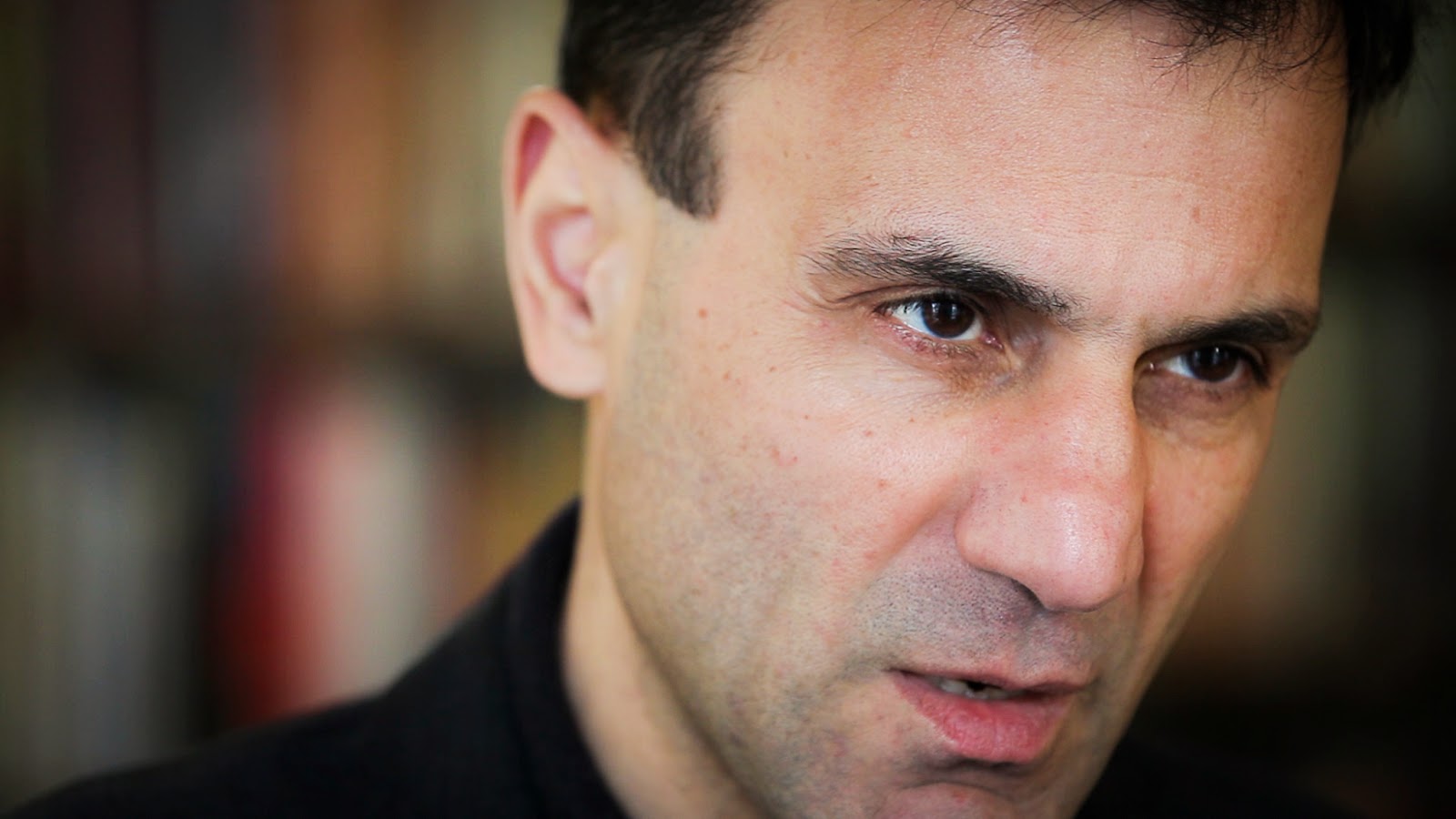
A fascinating interview with the newly elected member of the Greek Parliament, Costas Lapavitsas, recently appeared in the periodical Jacobin. [1]

Costas Lapavitsas
Lapavitsas, who represents Syriza in Parliament, is a well-known left wing economist and a self-described Marxist.  And unlike the Minister of Finance Yanis Varoufakis, Lapavitsas is no "erratic Marxist" but is very much at home in the language of orthodox Marxism.  He says that he is in favor of a socialist revolution and would like to see that come about in Greece and throughout  the world. He even invokes the Bolsheviks, favorably mentioning Lenin and Bukharin. 

However when we take a closer look at his statements, it becomes plain that his form of Marxism is much closer to the Menshevik variety than to Bolshevism.  He says,

“You don’t need a socialist revolution, and you don’t need to overthrow capitalism at every minute of the day to do small things. Of course, we aim for the overthrow of capitalism, and of course ultimately we would like to see the socialist revolution. But that’s not in the cards at the moment.”

Setting aside the straw man of those calling for the “overthrow of capitalism at every minute of the day”,  Lapavitsas clearly expresses the notion that while he thinks socialism is a good idea in some vague and distant future, it is not a realistic possibility in the immediate future or even in what he calls the “mid term”.  Instead,  he thinks that in the near and mid term the best that we can hope for is a more benevolent form of capitalism.  And he thinks this completely achievable,

“You don’t need socialist revolution in Greece, and you don’t need to overthrow capitalism in Greece to get rid of austerity. You don’t.”

This in itself is hardly an unusual position within Syriza.  After all, Syriza’s election manifesto promised to put an end to austerity without in any way challenging capitalism.  But what puts Lapavitsas in conflict with the majority of his colleagues in Syriza is his thesis that Syriza must abandon its commitment to remain within the EU and make plans to break from the Euro.   He thinks that policy of remaining within the EU that has been carried out by all the previous governments, whether they were Pasok or New Democracy, and now Syriza, has been a disaster. He emphasizes this point several times in the course of the interview,

“…you certainly need to get rid of the institutional framework of the euro. That simple position is not understood — or is not widely appreciated — within Syriza and not within the European left, and that has been a tragedy for years.”

What I found interesting in reading the interview with Lapavitsas was not his politics,  which is that of a garden variety reformist social-democrat of the old type – in contrast to the new type of social democats whom you can find in the German Social Democratic Party or in New Labour in the UK, who have adopted  neo-liberal economic policies.  Nor are his differences about the Euro with the majority of Syriza that interesting.  Indeed the  likelihood is that exiting from the Euro will become the prevailing view within Syriza in the next few months as the impossibility of remaining in the EU becomes more and more apparent.

But by far what is most interesting in this interview was Lapavitsas’ discussion of what concrete policies need to be implemented to bring about a Grexit.  He calls this ‘Plan B’.   He summarizes some of the measures required for the implementation of Plan B as follows:

“So the government would have to impose capital controls immediately, and it would have to impose bank controls immediately. It goes without saying. It would have to do what the EU did in the Cyprus case. Now, how long these controls will last and what form they will take will be a matter of how the situation unfolds. They will certainly last for a significant length of time. And some form of capital controls will of course remain, as they ought to…

Then the state will have to intervene once it has nationalized the banks and re-denominated their balance sheets, to restructure the banks. The banks need reorganization to see which banks will remain and on what terms. That’s a process that will take some time, and it will not be easy.”

Capital controls and nationalization of the banks are quite radical policies. Lapavitsas later even admits that the economic policies he is proposing will necessarily lead to some form of rationing.  The radicalism of these policies must be understood however within the broader context of radicalism to what end? For Lapavitsas the end is clearly to save capitalism, if not exactly the kind of capitalism of the Eurozone. He frankly acknowledges the pedigree of his proposals in the theories of John Maynard Keynes,

“Keynes and Keynesianism, unfortunately, remain the most powerful tools we’ve got, even as Marxists, for dealing with issues of policy in the here and now…

Marxism is about overturning capitalism and heading towards socialism. It has always been about that, and it will remain about that. Keynesianism is not about that. It’s about improving capitalism and even rescuing it from itself. That’s exactly right.”

One could hardly ask for a clearer statement of the direction of the official Left wing of Syriza.  And Lapavitsas admits that his brand of “orthodox” Marxism pretty much amounts to the same thing as the “erratic Marxism” of Yanis Varoufakis.


But whatever one thinks of the policies themselves one has to acknowledge that Lapavitsas criticism of much of the Left, that they have never thought through any concrete policies, is on the mark.  He says,

“There’s a traditional saying in Greek that a man who doesn’t want to get married keeps getting engaged. Well that’s what the Communists have been doing, unfortunately. Because they don’t want to tackle the question of dealing with the situation in the here and now, they talk about revolution.
So, if you do that, you don’t have to confront the question of the euro. You pretend the question of the euro is somehow either a minor question or a side question or whatever. Or you elevate things beyond: what you need is to get out of the European Union, to get out of NATO, to get out of this, that, and the other thing. In other words, you’re not offering any specific answers, because you’re answering everything.”

And while Lapavitsas remarks here are directed specifically against the Stalinist Communist Party of Greece (KKE),  they could just as easily apply to much of the Left. The KKE has a history of combining the worst sort of opportunism with a dogmatic sectarianism. So while they have had no problem in the past in participating in coalition governments with the bourgeoisie, they have steadfastly refused all demands for joint action in any of the demonstrations or general strikes against the previous Pasok and New Democracy governments.  And the KKE, like most sectarian outfits, steadfastly avoids putting forward any concrete policy proposals in its platforms but instead rely on abstract slogans.  Lapavitsas criticisms are certainly justified when it comes to these sectarian outfits (which Lapavitsas tries to identify with the entire Left.)

On the other hand, the opportunist ANTARSYA coalition ran in the last elections on a platform that has been correctly characterized as one of “left nationalism”.  It made an alliance with the MARS group which has been advocating a return to the drachma.  Unlike the sectarians ANTARSYA did have lots of “concrete proposals.”  In fact they advocated policies not so different than those proposed by Lapavitsas.  As one observer noted, for ANTARSYA,

“…the best alternative to a program of reform is to offer a rival program of greater reforms. In this revolutionaries are different from reformists principally in that they ask for more.” [2]

The author of those remarks also notes that ANTARSYA saw its role as that of playing a game of one-upmanship against Syriza,

“So Syriza offered Greek nationality to the children of all migrants; and, like a poker player, Antarsya “raised” them by offering to legalize all immigrants in Greece.”

But this raises an important question.  What would a revolutionary alternative to Syriza look like?  It would certainly not be the vacuous slogans offered by sectarians. Lapavitsas makes a valid point in that regard. But neither would it be Lapavitsas “Plan B” or the  more radical version of “Plan B” offered by groups like ANTARSYA.

Let’s call the alternative Plan C, the socialist alternative.  And unlike Lapavitsas,  for us socialism is  not a dim goal in a far removed future,  but an objective we can begin to move towards immediately and realize well within the span of one generation. The socialist alternative implies the reorganization of society on the basis of production for need instead of production for profit. It does mean that Greece’s future lies not with the EU or with a return to the drachma based on some kind of revival of Greek capitalism, but on the establishment of the Socialist United States of Europe.  But how does this come about?  Contrary to the sectarian ultra left groups, fighting for the socialist revolution internationally  does not mean we are absolved from developing concrete policy proposals for the  here and now.  In that respect Lapavitsas has a valid point.  What then would the concrete proposals needed to fill out Plan C look like?

To elaborate such policies involves some degree of speculation,  and by that I don’t mean elaborating a purely imaginary plan but something more like a thought experiment based on historical precedents whose applicability is very tentative and projections based on a course of events that cannot be predicted with any degree of precision.  Given that caveat, the exercise may nevertheless prove useful to those seriously working toward a socialist alternative for Greece. I will outline what I think are some of the key economic issues that need to be addressed.  There are clearly other issues relating to foreign policy, political organization, science and culture, etc that also need to be addressed in a serious program dealing with the transition to socialism. These could perhaps be the topic of a separate essay.

First of all one has to acknowledge that any such program cannot under any circumstances be implemented by Syriza, not only because Syriza is wedded to a program of reforms within capitalism despite its rhetoric, but also because by its nature the transition to socialism cannot be entrusted solely to the vehicle of parliamentary politics.  It will require action from the ground up, by the masses taking their destiny into their own hands and creating their own forms of organization.   It is also inconceivable that such actions can succeed without a trained revolutionary leadership. Nevertheless, in keeping with our thought experiment, let us imagine that Syriza was a genuine revolutionary organization. In that case it could do plenty, even within the framework of parliamentary politics, to encourage  a powerful movement by the masses. 

So  in this thought experiment we would be imagining what policies would be advocated by a parliamentary party, which unlike  the real Syriza,  saw the alternative to austerity as the inauguration of socialism. 

And the first thing we can say is that many of the policy proposals suggested by Lapavitsas would indeed be instituted immediately by a socialist government. An exit from the Euro would certainly be one of the first measures that would need to be implemented. Capital controls to prevent the flight of capital out of the country and the nationalization of the banks would also follow.  Even a form of rationing would undoubtedly be necessary in order to deal with the inevitable shock of a sudden transition to a different economic system.  One can say that these are “Keynesian” policies, although their purpose would be very different than that envisioned by Lapavitsas.  They would be measures on the road to socialism instead of measures meant to “save capitalism from itself”. The context of such measures makes all the difference. Such measures by themselves are certainly not “socialist”. They are clearly undertaken within the framework of a market economy.  But such measures will be necessary for a period of time as the economy is in transition to socialism.  To imagine that no period of transition is required to go from the rule of the law of value to the society of associated producers is sheer fantasy, especially for a small country like Greece that at least for a period, can be expected to be relatively isolated.   Clearly replacing the mechanism of the market that governs the production, distribution and consumption of an entire nation with another, completely new mechanism, is not a trivial task and if not thought through on the basis of the best available expert knowledge could have catastrophic consequences.  In all likelihood, even under the best of circumstances,  the transition will be accompanied by a period of perhaps severe privations, even worse than those suffered by the austerity measures imposed by the EU.  A revolutionary government would honestly explain that to its supporters.  If the masses believe in the prospect of socialism and are involved at every level of democratic decision making they will agree to the sacrifices required.  Most left wing groups who have not thought deeply about the implications of the  transition to socialism, seem to have forgotten this.  This was a point once made by George Orwell, though writing in a very different context, on the victory of the Labour Party after World War II and the repudiation of Churchill’s leadership.

“The weakness of all left-wing parties is their inability to tell the truth about the immediate future. When you are in opposition, and are trying to win support for a new economic and political programme it is your job to make people discontented, and you will inevitably do it by telling them that they will be better off in a material sense when the new programme is introduced. You probably don’t tell them, what may very well be true, that they won't experience these benefit immediately, but only after, say, twenty years. The British people have never been warned, i.e. by the Left, that the introduction of Socialism may mean a serious drop in the standard of living.” [3]

Orwell’s estimate of 20 years is needlessly pessimistic, but he is undoubtedly correct in his main point, that a transition to socialism will entail a period of deprivation and that a party that advocates this course needs to be honest about it.  Lapavitsas also, speaking as a professional economist, recognizes that a transition period will entail a period of perhaps severe deprivation. He says that even a “controlled exit” from the Euro would lead to worsening of conditions for workers,

“...wages must rise, but even if they rise, you’re not going to go back to where you were. It’s just not feasible at the moment. We need a growth strategy for that.”

Given the reality of a period of deprivation, why then continue to advocate a strategy of “saving capitalism” when one can embrace a strategy of a transition to socialism. Why go through  all that pain for such a meagre “gain”?

In any case a revolutionary government, while recognizing the necessity of sacrifices, would adopt a goal of minimizing them as far as possible and speed the transition to socialism.  That will mean looking for assistance from the international working class and the establishment of socialist regimes in other countries. Were Greece to embark on the road to socialism it could in turn spark political movements in other countries.  But even so, assistance from abroad will not happen overnight and until that is forthcoming the new regime must work out a plan for survival in the face of the near certain cut off of credit and trade by the EU and North America.  An economic boycott will be a certainty once the government repudiates the debts. One can expect that trade relations with countries that may be sympathetic to the new government may ease the burden.  Russia, China,Venezuela could possibly fill in some of the gap caused by the end of trade with the EU. 

Many details would have to be worked out. A plan for regulating what for a time would be a “mixed” economy would have to be developed.  Some enterprises, especially smaller ones, should be allowed to and even encouraged to continue operations on a for profit basis, though now they would be managed by and run democratically by their workers.  A master plan for regulating the chain of supply and demand in each industry and in the different branches of agriculture and their place in the overall economy would have to be worked out.  Finally, an analysis of how each industry and the economy as a whole impacts the environment and the climate would have to be integrated into any economic plan.  This would clearly require the combined expertise of specialists in economics and the social sciences as well experts within each industry. It would be an opportunity to harness the enthusiasm of students and  professionals in these fields and bring them together with workers in the different industries all working together cooperatively to come up with a viable economic plan.

There are of course some historical precedents the new government could examine for assisting it in formulating its economic policies, especially the policies adopted by the Bolsheviks immediately after their seizure of power.  But these are likely to be of only limited value given the vastly different circumstances of Russia in 1917 and Greece in 2015.  Without discounting the rich history  of lessons to be absorbed from a close study of the policies of the Bolsheviks and other historical precedents, the new government would be largely on its own blazing new trails in the making of history. Which is not to deny that they will have a vastly changed potential for coordinating economic planning and democratic participation as a result of the communications revolution brought on through the Internet.

We can continue this thought experiment in more detail, but the basic outline is clear enough. A real alternative to austerity is neither the wishful thinking or sloganeering of sectarians or the kind of false pragmatism of Lapavitsas.  Rather it means thinking concretely and deeply about what policies are entailed for a genuinely practical transition to socialism.

There is one last point in Lapavitsas interview that is worth a comment.  At one point he takes to tasks those Leftists who think that politics determines everything.  He says,

“Geopolitics and domestic politics, the balance of political forces,  that’s what Marxism has been reduced to, unfortunately. And, when you do that, when you commence with the politics — the balance of forces domestically or internationally — it is easy to engage in flights of fancy. It is easy to begin to think that, in the end, everything is politics, and therefore you can change the balance of political forces, and anything is achievable.
Well, I’m sorry, that’s not the case. And that’s not Marxism. As Marxists, we believe that politics, in the end is derivative of the material reality of economic and class relations. That’s a very, very profound statement by Karl Marx, so long as it is understood properly, so long as it’s not mechanical. The bottom line is this statement means that not everything is possible through politics.”

Here I would have to say that Lapavitsas is at once correct and incorrect.  It is true that many so-called Marxists engage in “flights of fancy”,  that is to say they view the possibilities for action simply  within the framework of political action without paying any attention to the constraints imposed by the economy.  But while Lapavitsas is correct in pointing out that for Marxists, “politics, in the end is derivative of the material reality of economic and class relations”,  he forgets that there is a dialectical relationship between economics and politics and that is also a truism for Marxists.  Although economics is certainly the final determinant in shaping the configuration of a society the political struggle can be the decisive factor in either opening or closing off an avenue of economic development at a critical moment.  Lapavitsas would have done well to recall an observation of Trotsky’s, who in writing on the impact of the Stalinist bureaucracy on the Soviet economy, noted the critical role of political forces,

“The processes of economic construction are not yet taking place within a classless society. The questions relating to the allotment of the national income compose the central focus of the plan… All these questions by their very nature do not allow for a priori decisions by the bureaucracy, which has fenced itself off from intervention by concerned millions.

The struggle between living interests, as the fundamental factor of planning, leads us into the domain of politics, which is concentrated economics.” [4]

Lapavitsas “forgets” this part of the dialectical relationship between politics and economics because he has decided to limit his choices to that between continuing the Euro and more austerity or Plan B, a transition to the drachma and a hopeless form of Greek capitalism.  He removes from the table any consideration of the real alternative to the Euro, Plan C, the transition to socialism.


Print Friendly and PDF
Share:

100th Anniversary of the October Revolution

100th Anniversary of the October Revolution
Listen to special broadcast

ΟΧΙ: Greece at the Crossroads

ΟΧΙ: Greece at the Crossroads
Essays on a turning point in Greece 2014 - 2017

Order ΟΧΙ : Greece at the Crossroads

Permanent Revolution Press

Permanent Revolution Press
Print edition of Crackpot Philosophy

Order Crackpot Philosophy

Trump and the train wreck of American liberalism

Trump and the train wreck of American liberalism
Two essays by Frank Brenner

Order PDF of 'Trump and the train wreck of American liberalism'

PDF of Brenner on Trump -$1

Contact Form

Name

Email *

Message *